A month ago, May 8, 2025, many countries commemorated 80 years since VE Day – the end of World War II in Europe.
When news broke in 1945 that Germany had officially surrendered, celebrations erupted throughout the Western Hemisphere.
But despite the grateful festivities across the Atlantic, the war was still raging in the Pacific. In fact, the Battle of Okinawa—the largest battle on Japanese soil—was in the sixth week of conflict, with more than six weeks to go before it ended.
What started as a Typhoon of Steel in early 1945, became a grueling combat battle when American Troops landed on Okinawa April 1st. The outnumbered Japanese soldiers and thousands of civilians entrenched themselves into the numerous rocky caves of the island, and the terrible conflict played out for nearly three months, effectively ending June 21, 1945. Over 12,000 American soldiers, 100,000 Japanese soldiers, and 100,000 Japanese civilians died.
What was once a relatively unknown tropical island is now the location of stunning and sobering history, with civilians caught in the middle.
The drawn-out battle and terrible casualties influenced the US’ decision to drop the first atomic bombs on Hiroshima and Nagasaki—providing an all-out show of power and seeking to avoid more elongated battles on the Japanese mainland. This horrific strategy worked, and the Japanese surrendered on September 2, 1945. And now—four months after peace in Europe—World War II was entirely and officially over.
But people in Okinawa would take decades to recover. In fact, some civilians continued living in caves for weeks after the battle finished, unaware that the fighting had ended.
Our family moved from Utah to Okinawa in July of 2020, and suddenly the history of this island became our history. We visited the Okinawa Peace Memorial Park and were touched by the sobering display of casualty names. We walked through the museum, internalizing facts and photographs. We climbed up the hill, past the monuments from each Japanese prefecture, overlooking the cliffs where some had jumped to their deaths during those fateful weeks.
And we stepped into the cool jungle cave where the final Japanese general and officers made their decision: two committed suicide and one sacrificed his honor and surrendered in his commander’s place. (He then went on to live many years as a teacher in Okinawa.)
We were surprised to discover that my sister-in-law’s uncle was among the American casualties on the island. We found his name etched on one of the many stone walls. We purchased flowers from a local farmer and laid them at the site. And we felt even more connected to the history here.
During our five years in Okinawa we’ve visited other historical sites: “Happy Cave” near our home—where hiding civilians were thankfully convinced that surrender was better than suicide by a Japanese man who had once lived among Americans in Hawai’i; an old cement hangar by the local school—location of a former Japanese runway; the memorial to Ernie Pyle—a ferry-ride away on IE Island; and Hacksaw Ridge—site to merciless terrain that has sparked stories and films.
Remnants of history are literally all around us. And this month marks 80 years since this terrible time.
Sometimes I am surprised that the world is relatively unaware of what happened here. Most American lives abundant lives: easy, and free. Some barely know the name Okinawa. Our previous home and life in rural Utah often seem far away from this historic and sacred place.
But history should still be valued. 80 years ago at this time, during this muggy month of May, soldiers and civilians hid and fought and starved and died. Right here where we stand.
Please. Take a moment. Read about the past. Remember what happened. Look at photos. Learn a few facts. And tell your children. These lessons should be remembered. And never forgotten.
I’ve lived in Japan now for 1/10th of my life… several of those years with my family.
Of course, I LOVE America and I always feel a thrill when we land in the USA.
But, after being in Asia for a while, there are a few Japanese customs that I think would benefit my home sweet home.
So, for what it’s worth, consider this, Americans.
FIVE SUGGESTIONS FROM THE LAND OF THE RISING SUN
1. GREET EVERYONE
Every day, everywhere.
Good morning. Good afternoon. Good evening. Thank you. Please. (And a slight bow doesn’t hurt.)
A myriad of simple phrases goes far in raising the courtesy level of a society. Imagine how much better we would all feel if we greeted others (and were greeted by strangers) all day long. It’s powerful!
2. SHED YOUR SHOES
This is a simple trait that I wonder hasn’t been adopted all over the world!
Taking off shoes as we walk inside limits dirt everywhere in every way. Plus, it reminds us to be respectful when we enter someone’s home, office or school.
Moses set this standard millennia ago: “…put off thy shoes from off thy feet, for the place whereon thou standest is holy ground.”~Exodus 3:5
3. GATHER YOUR GARBAGE
In America we are in such a frenzy to monitor litter, that we place large unsightly trash dispensers everywhere: at the entrance of every building and venue, all along the halls at school, in every single room we live in.
Yet despite these efforts, we still have trash-strewn streets and parks.
Strangely enough, finding a garbage can in Japan (the cleanest country in the world) is often a bit of a treasure hunt. And when you do find one, it will likely be quite small—too tiny to hold one American’s daily waste.
But the message (and results) are clear: Take care of your own trash!
For example: buy a sandwich, eat it, and carry the wrapper with you until you arrive home. Then dispose of it in your own bag—the bag you bought. And set it out for the trash pick up you paid for.
This entirely different mindset invites conservation and sustainability; and, thinking twice every time you want to throw something away.
That’s how the Japanese people live.
4. SWEEP YOUR SIDEWALK
I remember an early morning walk in Ube, Japan. The streets were silent, except for the swish of a tiny stick broom used by an elderly grandmother. I watched in awe as she meticulously swept the few squares of sidewalk in front of her modest home.
She daily cared for that stretch of cement and took pride in keeping it neat for pedestrians and bikes. It was not part of her property, but still a piece of her contribution to society.
I’ve observed the same trend here in Okinawa: Residents pull weeds on the road in front of their houses, wash off mud and dirt after storms, and keep drains clear. It’s truly amazing.
What if everyone swept the sidewalk near his or her residence?
The world—everywhere—would be cleaner and brighter.
5. COURTESY COUNTS
I’ve often marveled that an entire society has somehow mastered the ability to respectfully and kindly live together in small spaces. And they pass these polite traits onto their children.
They bow. They wait patiently. They help each other. They let others go first and respectfully move over when needed. They stand in line. They don’t honk their horns. They follow instructions and directions, making life easier and smoother for everyone.
In America we are so intent on individual rights and freedom of speech, that we rarely check our actions for kindness, appropriateness, or necessity.
The only way I imagine the Japanese people have learned this level of courtesy is by acknowledging the entire picture: The whole is greater than the parts.
Somehow they perceive the needs of others and are willing to put those needs above their own.
The result? A society that is safe, clean, courteous, and beautiful.
Six months ago my husband and I moved to Okinawa, Japan with six of our children. Yes…I know. Crazy!!!
We bid farewell to our country life in the States, flew to a small tropical island, and set up house. We left our classic hobby farm and spacious home for a small rental house next to banana and mulberry trees; started driving on the left side of the road, and traded our snow boots for snorkels. It’s been an adventure!
Even though I lived in Japan 25 years ago as a college student, coming back here as a busy mom has reminded me what a unique people the Japanese are. Their traditions and culture are inspiring! In fact, being here in Japan has inspired me—and my family—to re-examine several aspects of how we live.
Yes, the language, culture, and climate are different; but the biggest change has been our altered paradigm. Instead of seeing the world through the rose-colored, affluent lens of small-town Utah, we now view life with a broader vision—complete with more empathetic hearts and a greater understanding of people in general.
Here are nine lessons we have learned from our Japanese neighbors and friends.
Eat Less
There is a truth, universally acknowledged, that when you eat less, you feel better! Everyone knows Americans eat too much, but living in Japan has taught me how much Americans actually eat—and, I’m slightly embarrassed. We thrive on Big Macs and Biggie sizes, while most of the world survives on rice and veggies. The bottom line is we, too, could subsist (happily) on less.
Five of my children attend local Japanese schools and eat school lunch everyday with the native students. At first, their daily bowl of rice and seaweed soup left them feeling “starved”, but after a week their bodies adjusted. Now they happily scoop up their rice with their chopsticks and slurp up their soup in the bowl. And they are content. On rare days when a piece of bread is offered, they eat it carefully and savor the sweetness. When fish or chicken is part of the meal they are grateful. And if they get a slice of orange or pear for dessert, they consider it a good day.
No, the Japanese meals aren’t stingy, they are simply sufficient. Instead of Dino bites and mac and cheese, they offer tofu and cabbage, or fish and beans. Compared to our old school lunches, these meals actually feel real. They are not processed, but produced by local farmers and cooks.
I am grateful for this change in our family food mindset. At home we still enjoy lasagna and Cheerios and all of the traditional comfort foods we are used to, but we now know that they are a nicety, not a necessity, a luxury not a likelihood. As Mary Poppins said, “Enough is as good as a feast.”
Eat less, America.
2. Clean More
I know, I know. This sounds like an abusive rant. But the truth is, Americans often view “cleaning” as a chore for the lower class. We leave the floor mopping and toilet scrubbing to those who can’t get better jobs; and we sometimes live in grime ourselves at the excuse of being “too busy” to clean up or maintain our lives.
Japanese people, on the other hand, consider cleanliness a skill that even the young should learn. I find this perspective refreshing. After all, isn’t cleanliness next to godliness?
I remember when I went to pick up my kindergartener from his first day of Japanese school. There he was, dutifully washing his classroom floor with a rag. Was I appalled? No, but I was slightly shocked. Where were the janitors? The cute colored carpets? The cozy “classroom jobs” like line leader and teacher’s helper?
Then my older kids filled me in: “Every morning when we arrive at school, and every day after lunch all of the students spend 30 minutes cleaning the school.”
My kids explained that they wash windows, scrub floors, pull weeds, and wipe down walls. I was shocked and impressed. But what surprised me more is how much my children enjoyed it!
“I have to get to school early today,” my daughter remarked. “It’s our class’ turn to sweep the school yard.” Sure enough, when we arrived at the school there were several kids with “stick” brooms, sweeping the dirt, pulling up weeds, picking up trash, and preparing the grounds for the morning lessons. Fun? I guess so! As I watched, the Japanese kids laughed, visited with friends, worked together and were genuinely happy.
There are side benefits, too. One Saturday when I needed something to keep my kindergartener busy, I simply asked him to “wash the stairs.” He happily found a rag and showed me how he could get it wet and wring it out properly before mopping with it. Hooray! Happy boy, clean stairs, happy Mama.
Which brings me to my next point…
3. Live Simply
Japanese school playgrounds are not fancy: a dirt field, an exercise bar or two, maybe a baseball diamond. Nothing compared to the elaborate slides and jungle gym equipment I generally see at American schools. At first—much like the cleaning—I was slightly appalled.
“How do children have any fun on an empty field?” I wondered. But again, my kids set me straight.
“We run around and play tag, or kick a ball, or jump rope, or dig in the dirt and look for bugs.” In other words, their creative minds still find plenty of play during recess, and they actually thrive with the challenge of living with less.
The PE skills are impressive too. My kids have been taught and tested on cartwheels, frontwards and backwards rolls, turns and flips on an exercise bar, and high jumps over vaults. It’s really incredible.
A few days ago my girls excitedly shared, “We just got four swings on our playground!” Four swings for several hundred kids to use each day. Kids—that I might add—who have walked a mile or two to school while carrying their supplies and wearing…a mask.
4. Wear a mask. Asians have been doing this for years. Just do it.
5. Don’t use your car horn. Never. Ever. Ever.
Wait, what? Yep. Don’t ever use your car horn. I’m serious. Unless someone is dying, don’t push the button. Even if you’ve been cut off. Even if the guy in front of you stops suddenly. Even if the line of traffic slows because someone is entering or exiting. Just don’t use your horn. This is how the Japanese live, and I’m always amazed.
When someone absent-mindedly doesn’t start moving right at a green light, the Japanese all wait patiently, “ohne” horn. When someone noses in front of them, they kindly let them merge, without honking. Can you imagine how relaxing it is to drive without road rage? If you make a mistake, that’s ok. If you mess up, no worries about feeling terrible. Just do your best and assume that everyone around you believes you are doing your best as well.
The other day I made the mistake of glancing at my phone while waiting at a red light. When I finally looked up again, I had entirely missed the green light, and had to wait another whole cycle before I could go. And, not only did I miss the green, but all the cars behind me did, too! I was so embarrassed!
But thankfully, the long line of cars waited patiently and silently, without laying on their horns, assuming my text must be more important than driving through the intersection. Well, my text wasn’t that important. But I did learn how courteous the Japanese people are, and I decided to be kinder myself. Remember, don’t use your horn.
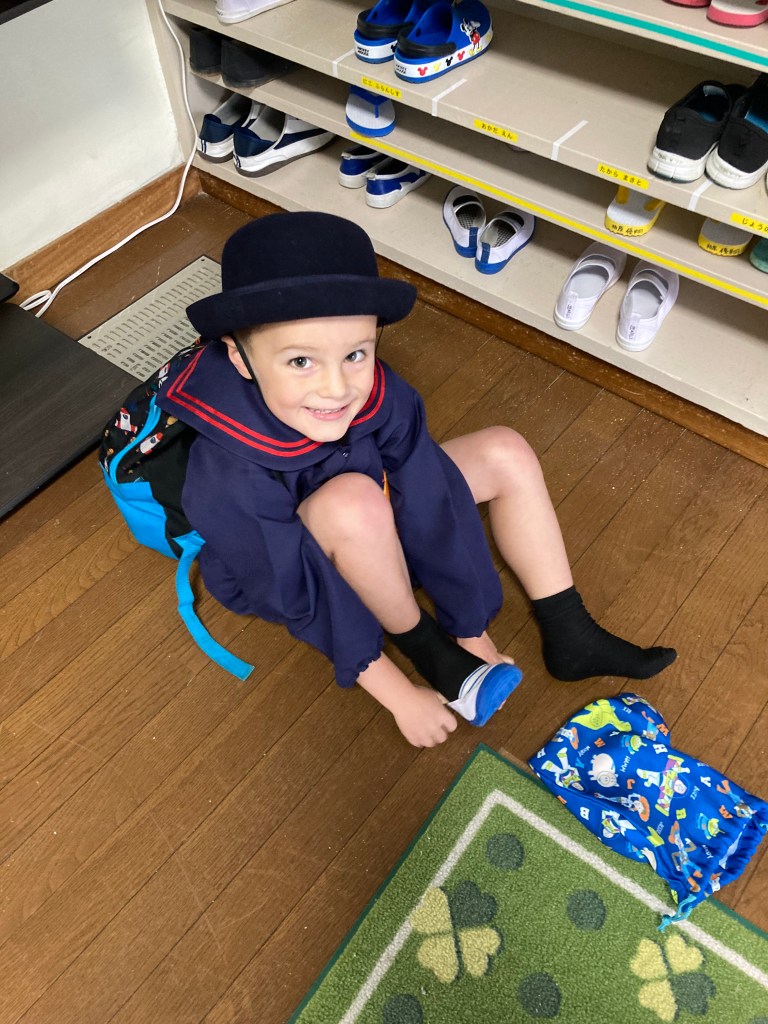
6. Take your shoes off.
Leave the grime and dirt of the world outside. Don’t bring it into your house. It’s that easy.
I promise, taking your shoes off will make your home cleaner and somehow, softer. Those who enter, including your children, will feel more respect for the sacred space within your walls. As the Bible teaches, “Put off thy shoes from off thy feet, for the place whereon thou standest is holy ground” (Exodus 3:5). Homes are holy. Walk softly, in clean feet.
7. Take daily naps
We’ve had a few painters and other maintenance workers in our yard recently. One day when I walked outside to get the mail, I was surprised to see a worker curled up comfortably on the driveway. Another was sleeping under a bush, and a third worker was prostrate on our porch, catching some shut-eye. After my initial shock, I smiled, grabbed the mail, and left them all to their few minutes of break.
After that, I watched and discovered that everyday they took a few minutes to rest, in a prone position. How smart! Everyone needs an afternoon nap, even those of us who are not infants. Taking a brief siesta in the afternoon rejuvenates and regenerates us. It’s a piece of our American culture that we should reinsert, and would likely make each of us a little more cheerful.
Which brings me to my next point:
8. Be Courteous
Japanese people are incredibly courteous and kind. Their polite, quiet mannerisms and ability to follow directions and rules make Americans look like brazen bulls. Bowing to your neighbor, always (always!) extending a greeting on the street, and willingly obeying laws and guidelines make their communities simple and safe. I am embarrassed to turn on the news and view the bashing, the riots, and the shameless disregard for authority that Americans often display. I am not referring to our right to free speech and the power that We the People are blessed to hold; I mean the lack of restraint and respect that comes from common courtesy for mankind. We can do better, America.
default
9. Be content
I realize that being discontent is an American trademark. We are bred to stretch our horizons, go further, and aim for the stars. That’s the American Dream. However, while spreading our wings is commendable, there is also something beautiful about simply being content.
I’ll say it again. “Enough is as good as a feast.” Japanese people are inspiringly content with their lives: a simple house, a car with maybe a carport, veggies and fish for a meal, some flowers on the balcony. By American standards many of them are poor, yet they are grateful and happy. As I walk the streets of our neighborhood I see small yards, simple gardens, and plain houses. Yet the children play happily with a ball or a piece of chalk, and it is enough. Their parents live in one place throughout their lives, assist the grandparents, learn a simple trade and have a good life. Perhaps there could be a happy medium between the grit-driving/always attaining lifestyle patterns of the Western world and the peaceful living of the East. Be content.
Yes, aside from the rice, the ocean, the fish, the shoes, and the myriad of other culture differences, I’m grateful for the lessons I’ve learned from the Japanese. When we return home, I hope my kids will carry some of these patterns of living in their pockets: health, cleanliness, courtesy, contentment; and make their own lives—and our future neighborhoods—a better place to be.








 Meadowlark Media