A Time to Remember – 80 Years since the Battle of Okinawa

A month ago, May 8, 2025, many countries commemorated 80 years since VE Day – the end of World War II in Europe.

When news broke in 1945 that Germany had officially surrendered, celebrations erupted throughout the Western Hemisphere.

But despite the grateful festivities across the Atlantic, the war was still raging in the Pacific. In fact, the Battle of Okinawa—the largest battle on Japanese soil—was in the sixth week of conflict, with more than six weeks to go before it ended.

What started as a Typhoon of Steel in early 1945, became a grueling combat battle when American Troops landed on Okinawa April 1st. The outnumbered Japanese soldiers and thousands of civilians entrenched themselves into the numerous rocky caves of the island, and the terrible conflict played out for nearly three months, effectively ending June 21, 1945. Over 12,000 American soldiers, 100,000 Japanese soldiers, and 100,000 Japanese civilians died.

What was once a relatively unknown tropical island is now the location of stunning and sobering history, with civilians caught in the middle.

The drawn-out battle and terrible casualties influenced the US’ decision to drop the first atomic bombs on Hiroshima and Nagasaki—providing an all-out show of power and seeking to avoid more elongated battles on the Japanese mainland. This horrific strategy worked, and the Japanese surrendered on September 2, 1945. And now—four months after peace in Europe—World War II was entirely and officially over.

But people in Okinawa would take decades to recover. In fact, some civilians continued living in caves for weeks after the battle finished, unaware that the fighting had ended.

Our family moved from Utah to Okinawa in July of 2020, and suddenly the history of this island became our history. We visited the Okinawa Peace Memorial Park and were touched by the sobering display of casualty names. We walked through the museum, internalizing facts and photographs. We climbed up the hill, past the monuments from each Japanese prefecture, overlooking the cliffs where some had jumped to their deaths during those fateful weeks.

And we stepped into the cool jungle cave where the final Japanese general and officers made their decision: two committed suicide and one sacrificed his honor and surrendered in his commander’s place. (He then went on to live many years as a teacher in Okinawa.)

We were surprised to discover that my sister-in-law’s uncle was among the American casualties on the island. We found his name etched on one of the many stone walls. We purchased flowers from a local farmer and laid them at the site. And we felt even more connected to the history here.

During our five years in Okinawa we’ve visited other historical sites: “Happy Cave” near our home—where hiding civilians were thankfully convinced that surrender was better than suicide by a Japanese man who had once lived among Americans in Hawai’i; an old cement hangar by the local school—location of a former Japanese runway; the memorial to Ernie Pyle—a ferry-ride away on IE Island; and Hacksaw Ridge—site to merciless terrain that has sparked stories and films.

Remnants of history are literally all around us. And this month marks 80 years since this terrible time.

Sometimes I am surprised that the world is relatively unaware of what happened here. Most American lives abundant lives: easy, and free. Some barely know the name Okinawa. Our previous home and life in rural Utah often seem far away from this historic and sacred place.

But history should still be valued. 80 years ago at this time, during this muggy month of May, soldiers and civilians hid and fought and starved and died. Right here where we stand.

Please. Take a moment. Read about the past. Remember what happened. Look at photos. Learn a few facts. And tell your children. These lessons should be remembered. And never forgotten.

80 years is not so long ago…

When Queens Ride By

By Agnes Sligh Turnbull

First published in 1926

(A story from my childhood that teaches many lessons. So glad the text is still available online in the public domain.)

Jennie Musgrave woke at the shrill rasp of the alarm clock as she always woke—with the shuddering start and a heavy realization that the brief respite of the night’s oblivion was over. She had only time to glance through the dull light at the cluttered, dusty room, before John’s voice was saying sleepily as he said every morning, “All right, let’s go. It doesn’t seem as if we’d been in bed at all!”

Jennie dressed quickly in the clothes, none too clean, that, exhausted, she had flung from her the night before. She hurried down the back stairs, her coarse shoes clattering thickly upon the bare boards. She kindled the fire in the range and then made a hasty pretense at washing in the basin in the sink.

John strode through the kitchen and on out to the barn. There were six cows to be milked and the great cans of milk to be taken to the station for the morning train.

Jennie put coffee and bacon on the stove, and then, catching up a pail from the porch, went after John. A golden red disk broke the misty blue of the morning above the cow pasture. A sweet, fragrant breath blew from the orchard. But Jennie neither saw nor felt the beauty about her.

She glanced at the sun and thought, ‘It’s going to be a hot day.’ She glanced at the orchard, and her brows knit. There it hung. All that fruit. Bushels of it going to waste. Maybe she could get time that day to make some more apple butter. But the tomatoes wouldn’t wait. She must pick them and get them to town today, or that would be a dead loss. After all her work, well, it would only be in a piece with everything else if it did happen so. She and John had bad luck, and they might as well make up their minds to it.

She finished her part of the milking and hurried back again to the overcooked bacon and strong coffee. The children were down, clamorous, dirty, always underfoot. Jim, the eldest, was in his first term of school. She glanced at his spotted waist. He should have a clean one. But she couldn’t help it. She couldn’t get the washing done last week, and when she was to get a day for it this week she didn’t know, with all the picking and the trips to town to make!

Breakfast was hurried and unpalatable, a sort of grudging concession to the demands of the body. Then John left in the milk wagon for the station and Jennie packed little Jim’s lunch basket with bread and apple butter and pie, left the two little children to their own devices in the backyard, and started toward the barn. There was no time to do anything in the house. The chickens and turkeys had to be attended to, and then she must get to the tomato patch before the sun got too hot. Behind her was the orchard with its rows and rows of laden apple trees. Maybe this afternoon—maybe tomorrow morning. There were the potatoes, too, to be lifted. Too hard work for a woman. But what were you going to do? Starve? John worked till dark in the fields.

She pushed her hair back with a quick, boyish sweep of her arm and went on scattering the grain to the fowls. She remembered their eager plans when they were married, when they took over the old farm—laden with its heavy mortgage—that had been John’s father’s. John had been so straight of back then and so jolly. Only seven years, yet now he was stooped a little, and his brows were always drawn, as though to hide a look of ashamed failure. They had planned to have a model farm someday: blooded stock, a tractor, a new barn. And then such a home they were to make of the old stone house! Jennie’s hopes had flared higher even than John’s. A rug for the parlor, an overstuffed set like the one in the mail-order catalogue, linoleum for the kitchen, electric lights! They were young and, oh, so strong! There was nothing they could not do if they only worked hard enough.

But that great faith had dwindled as the first year passed. John worked later and later in the evenings. Jennie took more and more of the heavy tasks upon her own shoulders. She often thought with some pride that no woman in the countryside ever helped her husband as she did. Even with the haying and riding the reaper. Hard, coarsening work, but she was glad to do it for John’s sake.

The sad riddle of it all was that at the end of each year they were no further on. The only difference from the year before was another window shutter hanging from one hinge and another crippled wagon in the barnyard which John never had time to mend. They puzzled over it in a vague distress.

And meanwhile life degenerated into a straining, hopeless struggle. Sometimes lately John had seemed a little listless, as though nothing mattered. A little bitter when he spoke of Henry Davis.

Henry held the mortgage and had expected a payment on the principle this year. He had come once and looked about with something very like a sneer on his face. If he should decide someday to foreclose—that would be the final blow. They never would get up after that. If John couldn’t hold the old farm, he could never try to buy a new one. It would mean being renters all their lives. Poor renters at that!

She went to the tomato field. It had been her own idea to do some trucking along with the regular farm crops. But, like everything else, it had failed of her expectations. As she put the scarlet tomatoes, just a little overripe, into the basket, she glanced with a hard tightening of her lips toward a break in the trees a half mile away where a dark, listening bit of road caught the sun. Across its polished surface twinkled an endless procession of shining, swift-moving objects: The State Highway.

Jennie hated it. In the first place, it was so tauntingly near and yet so hopelessly far from them. If it only ran by their door, as it did past Henry Davis’s for instance, it would solve the whole problem of marketing the fruits and vegetables. Then they could set the baskets on the lawn, and people could stop for them. But as it was, nobody all summer long had paid the least attention to the sign John had put up at the end of the lane. And no wonder. Why should travelers drive their cars over the stony country byway, when a little farther along they would find the same fruit spread temptingly for them at the very roadside?

But there was another reason she hated that bit of sleek road showing between the trees. She hated it because it hurt her with its suggestions of all that passed her by in that endless procession twinkling in the sunshine. There they kept going, day after day, those happy, carefree women, riding in handsome limousines or in gay little roadsters. Some in plainer cars, too, but even those were, like the others, women who could have rest, pleasure, comfort for the asking. They were whirled along hour by hour to new pleasures, while she was weighted to the drudgery of the farm like one of the great rocks in the pasture field.

And—most bitter thought of all—they had pretty homes to go back to when the happy journey was over. That seemed to be the strange and cruel law about homes. The finer they were, the easier it was to leave them. Now with her—if she had the rug for the parlor and the stuffed furniture and linoleum for the kitchen, she shouldn’t mind anything so much then; she had nothing, nothing but hard slaving and bad luck. And the highway taunted her with it. Flung its impossible pleasures mockingly in her face as she bent over the vines or dragged the heavy baskets along the rows.

The sun grew hotter. Jennie put more strength into her task. She knew, at last, by the scorching heat overhead that is was nearing noon. She must have a bit of lunch ready for John when he came in. There wasn’t time to prepare much. Just reheat the coffee and set down some bread and pie.

She started towards the house, giving a long yodeling call for the children as she went. They appeared from the orchard, tumbled and torn from experiments with the wire fence. Her heart smothered her at the sight of them. Among the other dreams that the years had crushed out were those of little rosy boys and girls in clean suits and fresh ruffled dresses. As it was, the children had just grown like farm weeds.

This was the part of all the drudgery that hurt most. That she had not time to care for her children, sew for them, teach them things that other children knew. Sometimes it seemed as if she had no real love for them at all. She was too terribly tired as a rule to have any feeling. The only times she used energy to talk to them was when she had to reprove them for some dangerous misdeed. That was all wrong. It seemed wicked; but how could she help it? With the work draining the very life out of her, strong as she was.

John came in heavily, and they ate in silence except for the children’s chatter. John hardly looked up from his plate. He gulped down great drafts of the warmed-over coffee and then pushed his chair back hurriedly.

“I’m goin’ to try to finish the harrowin’ in the south field,” he said.

“I’m at the tomatoes,” Jennie answered. “I’ve got them’ most all picked and ready for takin’.”

That was all. Work was again upon them.

It was two o’clock by the sun, and Jennie had loaded the last heavy basket of tomatoes on the milk wagon in which she must drive to town, when she heard shrill voices sounding along the path. The children were flying in excitement toward her.

“Mum! Mum! Mum!” They called as they came panting up to her with big, surprised eyes.

“Mum, there’s a lady up there. At the kitchen door. All dressed up. A pretty lady. She wants to see you.”

Jennie gazed down at them disbelievingly. A lady, a pretty lady at her kitchen door? All dressed up! What that could mean! Was it possible someone had at last braved the stony lane to buy fruit? Maybe bushels of it!

“Did she come in a car?” Jennie asked quickly.

“No, she just walked in. She’s awful pretty. She smiled at us.”

Jennie’s hopes dropped. Of course. She might have known. Some agent likely, selling books. She followed the children wearily back along the path and in at the rear door of the kitchen. Across from it another door opened into the side yard. Here stood the stranger.

The two women looked at each other across the kitchen, across the table with the remains of two meals upon it, the strewn chairs, the littered stove—across the whole scene of unlovely disorder. They looked at each other in startled surprise, as inhabitants of Earth and Mars might look if they were suddenly brought face-to-face.

Jennie saw a woman in a gray tweed coat that seemed to be part of her straight, slim body. A small gray hat with a rose quill was drawn low over the brownish hair. Her blue eyes were clear and smiling. She was beautiful! And yet she was not young. She was in her forties, surely. But an aura of eager youth clung to her, a clean and exquisite freshness.

The stranger in her turn looked across at a young woman, haggard and weary. Her yellowish hair hung in straggling wisps. Her eyes looked hard and hunted. Her cheeks were thin and sallow. Her calico dress was shapeless and begrimed from her work.

So they looked at each other for one long, appraising second. Then the woman in gray smiled.

“How do you do? ” she began. “We ran our car into the shade of your lane to have our lunch and rest for a while. And I walked on up to buy a few apples, if you have them.”

Jennie stood staring at the stranger. There was an unconscious hostility in her eyes. This was one of the women from the highway. One of those envied ones who passed twinkling through the summer sunshine from pleasure to pleasure while Jennie slaved on.

But the pretty lady’s smile was disarming. Jennie started toward a chair and pulled off the old coat and apron that lay on it.

“Won’t you sit down?” she said politely. “I’ll go and get the apples. I’ll have to pick them off the tree. Would you prefer Rambos?”

“I don’t know what they are, but they sound delicious. You must choose them for me. But mayn’t I come with you? I should love to help pick them.”

Jennie considered. She felt baffled by the friendliness of the other woman’s face and utterly unable to meet it. But she did not know how to refuse.

“Why I s’pose so. If you can get through the dirt.”

She led the way over the back porch with its crowded baskets and pails and coal buckets, along the unkept path toward the orchard. She had never been so acutely conscious of the disorder about her. Now a hot shame brought a lump to her throat. In her preoccupied haste before, she had actually not noticed that tub of overturned milk cans and rubbish heap! She saw it all now swiftly through the other woman’s eyes. And then that new perspective was checked by a bitter defiance. Why should she care how things looked to this woman? She would be gone, speeding down the highway in a few minutes as though she had never been there.

She reached the orchard and began to drag a long ladder from the fence to the Rambo tree.

The other woman cried out in distress. “Oh, but you can’t do that! You mustn’t. It’s too heavy for you, or even for both of us. Please just let me pick a few from the ground.”

Jennie looked in amazement at the stranger’s concern. It was so long since she had seen anything like it.

“Heavy?” she repeated. “This ladder? I wish I didn’t ever lift anything heavier than this. After hoistin’ bushel baskets of tomatoes onto a wagon, this feels light to me.”

The stranger caught her arm. “But—but do you think it’s right? Why, that’s a man’s work.”

Jennie’s eyes blazed. Something furious and long-pent broke out from within her. “Right! Who are you to be askin’ me whether I’m right or not? What would have become of us if I didn’t do a man’s work? It takes us both, slaving away, an’ then we get nowhere. A person like you don’t know what work is! You don’t know—”

Jennie’s voice was the high shrill of hysteria; but the stranger’s low tones somehow broke through. “Listen,” she said soothingly. “Please listen to me. I’m sorry I annoyed you by saying that, but now, since we are talking, why can’t we sit down here and rest a minute? It’s so cool and lovely here under the trees, and if you were to tell me all about it—because I’m only a stranger—perhaps it would help. It does sometimes, you know. A little rest would—”

“Rest! Me sit down to rest, an’ the wagon loaded to go to town? It’ll hurry me now to get back before dark.”

And then something strange happened. The other women put her cool, soft hand on Jennie’s grimy arm. There was a compelling tenderness in her eyes. “Just take the time you would have spent picking apples. I would so much rather. And perhaps somehow I could help you. I wish I could. Won’t you tell me why you have to work so hard?”

Jennie sank down on the smooth green grass. Her hunted, unwilling eyes had yielded to some power in the clear, serene eyes of the stranger. A sort of exhaustion came over her. A trembling reaction from the straining effort of weeks.

“There ain’t much to tell,” she said half sullenly, “only that we ain’t gettin’ ahead. We’re clean discouraged, both of us. Henry Davis is talking about foreclosin’ on us if we don’t pay some principle. The time of the mortgage is out this year, an’ mebbe he won’t renew it. He’s got plenty himself, but them’s the hardest kind.” She paused; then her eyes flared. “An’ it ain’t that I haven’t done my part. Look at me. I’m barely thirty, an’ I might be fifty. I’m so weather-beaten. That’s the way I’ve worked!”

“And you think that has helped your husband?”

“Helped him?” Jennie’s voice was sharp. “Why shouldn’t it help him?”

The stranger was looking away through the green stretches of orchard. She laced her slim hands together about her knees. She spoke slowly. “Men are such queer things, husbands especially. Sometimes we blunder when we are trying hardest to serve them. For instance, they want us to be economical, and yet they want us in pretty clothes. They need our work, and yet they want us to keep our youth and our beauty. And sometimes they don’t know themselves which they really want most. So we have to choose. That’s what makes it so hard.”

She paused. Jennie was watching her with dull curiosity as though she were speaking a foreign tongue.

Then the stranger went on:

“I had to choose once, long ago; just after we were married, my husband decided to have his own business, so he started a very tiny one. He couldn’t afford a helper, and he wanted me to stay in the office while he did the outside selling. And I refused, even though it hurt him. Oh, it was hard! But I knew how it would be if I did as he wished. We would both have come back each night. Tired out, to a dark, cheerless house and a picked-up dinner. And a year if that might have taken something away from us—something precious. I couldn’t risk it, so I refused and stuck to it.”

“And then how I worked in my house—a flat it was then. I had so little outside of our wedding gifts; but at least I could make it a clean, shining, happy place. I tried to give our little dinners the grace of a feast. And as the months went on, I knew I had done right. My husband would come home dead-tired and discouraged, ready to give up the whole thing. But after he had eaten and sat down in our bright little living room, and I had read to him or told him all the funny things I could invent about my day, I could see him change. By bedtime he had his courage back, and by morning he was at last ready to go out and fight again. And at last he won, and he won his success alone, as a man loves to do.”

Still Jennie did not speak. She only regarded her guest with a half-resentful understanding.

The woman in gray looked off again between the trees. Her voice was very sweet. A humorous little smile played about her lips.

“There was a queen once,” she went on, “who reigned in troublous days. And every time the country was on the brink of war and the people ready to fly into a panic, she would put on her showiest dress and take her court with her and go hunting. And when the people would see her riding by, apparently so gay and happy, they were sure all was well with the government. So she tided over many a danger. And I’ve tried to be like her.

“Whenever a big crisis comes in my husband’s business—and we’ve had several—or when he’s discouraged, I put on my prettiest dress and get the best dinner I know how or give a party! And somehow it seems to work. That’s the woman’s part, you know. To play the queen—”

A faint honk-honk came from the lane. The stranger started to her feet. “That’s my husband. I must go. Please don’t bother about the apples. I’ll just take these from under the tree. We only wanted two or three, really. And give these to the children.” She slipped two coins into Jennie’s hand.

Jennie had risen, too, and was trying from a confusion of startled thoughts to select one for speech. Instead she only answered the other woman’s bright good-bye with a stammering repetition and a broken apology about the apples.

She watched the stranger’s erect, lithe figure hurrying away across the path that led directly to the lane. Then she turned her back to the house, wondering dazedly if she had only dreamed that the other woman had been there. But no, there were emotions rising hotly within her that were new. They had had no place an hour before. They had risen at the words of the stranger and at the sight of her smooth, soft hair, the fresh color in her cheeks, the happy shine of her eyes.

A great wave of longing swept over Jennie, a desire that was lost in choking despair. It was as thought she had heard a strain of music for which she had waited all her life and then felt it swept away into silence before she had grasped its beauty. For a few brief minutes she, Jennie Musgrave, had sat beside one of the women of the highway and caught a breath of her life—that life which forever twinkled in the past in bright procession, like the happenings of a fairy tale. Then she was gone, and Jennie was left as she had been, bound to the soil like one of the rocks of the field.

The bitterness that stormed her heart now was different from the old dull disheartenment. For it was coupled with new knowledge. The words of the stranger seemed more vivid to her than when she had sat listening in the orchard. But they came back to her with the pain of agony.

“All very well for her to talk so smooth to me about man’s work and woman’s work! An’ what she did for her husband’s big success. Easy enough for her to sit talking about queens! What would she do if she was here on this farm like me? What would a woman like her do?”

Jennie had reached the kitchen door and stood there looking at the hopeless melee about her. Her words sounded strange and hollow in the silence of the house. “Easy for her!” she burst out. She never had the work pilin’ up over her like I have. She never felt it at her throat like a wolf, the same as John an’ me does. Talk about choosin’! I haven’t got no choice. I just got to keep goin’—just keep goin’, like I always have—”

She stopped suddenly. There in the middle of the kitchen floor, where the other woman had passed over, lay a tiny square of white. Jennie crossed to it quickly and picked it up. A faint delicious fragrance like the dream of a flower came from it. Jennie inhaled it eagerly. It was not like any odor she had ever known. It made her think of sweet, strange things. Things she had never thought about before. Of gardens in the early summer dusk, of wide fair rooms with the moonlight shining in them. It made her somehow think with vague wistfulness of all that.

She looked carefully at the tiny square. The handkerchief was of fine, fairylike smoothness. In the corner a dainty blue butterfly spread his wings. Jennie drew in another long breath. The fragrance filled her senses again. Her first greedy draft had not exhausted it. It would stay for a while, at least.

She laid the bit of white down cautiously on the edge of the table and went to the sink, where she washed her hands carefully. The she returned and picked up the handkerchief again with something like reverence. She sat down, still holding it, staring at it. This bit of linen was to her an articulated voice. She understood its language. It spoke to her of white, freshly washed clothes blowing in the sunshine, of an iron moving smoothly, leisurely, to the accompaniment of a song over snowy folds; it spoke to her of quiet, orderly rooms and ticking clocks and a mending basket under the evening lamp; it spoke to her of all the peaceful routine of a well managed household, the kind she had once dreamed of having.

But more than this, the exquisite daintiness of it, the sweet, alluring perfume spoke to her of something else which her heart understood, even though her speech could have found no words for it. She could feel gropingly the delicacy, the grace, the beauty that made up the other woman’s life in all its relations.

She, Jennie, had none of that. Everything about their lives, hers and John’s, was coarsened, soiled somehow by the dragging, endless labor or the days.

Jennie leaned forward, her arms stretched tautly before her upon her knees, her hands clasped tightly over the fragrant bit of white. Suppose she were to try doing as the stranger had said. Suppose that she spent her time on the house and let the outside work go. What then? What would John say? Would they be much farther behind than they were now? Could they be? And suppose, by some strange chance, the other woman had been right! That a man could be helped more by doing of these other things she had neglected?

She sat very still, distressed, uncertain. Out in the barnyard waited the wagon of tomatoes, overripe now for market. No, she could do nothing today, at least, but go on as usual.

Then her hands opened a little; the perfume within them came up to her, bringing again that thrill of sweet, indescribable things.

She started up, half-terrified at her own resolve. “I’m goin’ to try it now. Mebbe I’m crazy, but I’m goin’ to do it anyhow!”

It was a long time since Jennie had performed such a meticulous toilet. It was years since she had brushed her hair. A hasty combing had been its best treatment. She put on her one clean dress, the dark voile reserved for trips to town. She even changed from her shapeless, heavy shoes to her best ones. Then, as she looked at herself in the dusty mirror, she saw that she was changed. Something, at least, of the hard haggardness was gone from her face, and her hair framed it with smooth softness. Tomorrow she would wash it. It used to be almost yellow.

She went to the kitchen. With something of the burning zeal of a fanatic, she attacked the confusion before her. By half past four the room was clean: the floor swept, the stove shining, dishes and pans washed and put in their places. From the tumbled depths of a drawer Jennie had extracted a white tablecloth that had been bought in the early days, for company only. With a spirit of daring recklessness she spread it on the table. She polished the chimney of the big oil lamp and then set the fixture, clean and shining, in the center of the white cloth.

Now the supper! And she must hurry. She planned to have it at six o’ clock and ring the big bell for John fifteen minutes before, as she used to just after they were married.

She decided upon fried ham and browned potatoes and applesauce with hot biscuits. She hadn’t made them for so long, but her fingers fell into their old deftness. Why, cooking was just play if you had time to do it right! Then she thought of the tomatoes and gave a little shudder. She thought of the long hours of backbreaking work she had put into them and called herself a little fool to have been swayed by the words of a stranger and the scent of a handkerchief, to neglect her rightful work and bring more loss upon John and herself. But she went on, making the biscuits, turning the ham, setting the table.

It was half past five; the first pan of flaky brown mounds had been withdrawn from the oven, the children’s faces and hands had been washed and their excited questions satisfied, when the sound of a car came from the bend. Jennie knew that car. It belonged to Henry Davis. He could be coming for only one thing.

The blow they had dreaded, fending off by blind disbelief in the ultimate disaster, was about to fall. Henry was coming to tell them he was going to foreclose. It would almost kill John. This was his father’s old farm. John had taken it over, mortgage and all, so hopefully, so sure he could succeed where his father had failed. If he had to leave now there would be a double disgrace to bear. And where could they go? Farms weren’t so plentiful.

Henry had driven up to the side gate. He fumbled with some papers in his inner pocket as he started up the walk. A wild terror filled Jennie’s heart. She wanted desperately to avoid meeting Henry Davis’ keen, hard face, to flee somewhere, anywhere before she heard the words that doomed them.

Then as she stood shaken, wondering how she could live through what the next hours would bring, she saw in a flash the beautiful stranger as she had sat in the orchard, looking off between the trees and smiling to herself. “There was once a queen.”

Jennie heard the words again distinctly just as Henry Davis’ steps sounded sharply nearer on the walk outside. There was only a confused picture of a queen wearing the stranger’s lovely, highbred face, riding gaily to the hunt through forests and towns while her kingdom was tottering. Riding gallantly on, in spite of her fears.

Jennie’s heart was pounding and her hands were suddenly cold. But something unreal and yet irresistible was sweeping her with it. “There was once a queen.”

She opened the screen door before Henry Davis had time to knock. She extended her hand cordially. She was smiling. “Well, how d’ you do, Mr. Davis. Come right in. I’m real glad to see you. Been quite a while since you was over.”

Henry looked surprised and very much embarrassed. “Why, no, now, I won’t go in. I just stopped to see John on a little matter of business. I’ll just—”

“You’ll just come right in. John will be in from milkin’ in a few minutes an’ you can talk while you eat, both of you. I’ve supper just ready. Now step right in, Mr. Davis!”

As Jennie moved aside, a warm, fragrant breath of fried ham and biscuits seemed to waft itself to Henry Davis’ nostrils. There was a visible softening of his features. “Why, no, I didn’t reckon on anything like this. I ‘lowed I’d just speak to John and then be gettin’ on.”

“They’ll see you at home when you get there,” Jennie put in quickly. “You never tasted my hot biscuits with butter an’ quince honey, or you wouldn’t take so much coaxin’!”

Henry Davis came in and sat in the big, clean, warm kitchen. His eyes took in every detail of the orderly room: the clean cloth, the shining lamp, the neat sink, the glowing stove. Jennie saw him relax comfortably in his chair. Then above the aromas of the food about her, she detected the strange sweetness of the bit of white linen she had tucked away in the bosom of her dress. It rose to her as a haunting sense of her power as a woman.

She smiled at Henry Davis. Smiled as she would never have thought of doing a day ago. Then she would have spoken to him with a drawn face full of subservient fear. Now, though the fear clutched her heart, her lips smiled sweetly, moved by that unreality that seemed to possess her:

“There was once a queen. . .”

“An’ how are things goin’ with you, Mr. Davis?” she asked with a blithe upward reflection.

Henry Davis was very human. He had never noticed before that Jennie’s hair was so thick and pretty and that she had such pleasant ways. Neither had he dreamed that she was such a good cook as the sight and smell of the supper things would indicate. He was very comfortable there in the big sweet-smelling kitchen.

He smiled back. It was an interesting experiment on Henry’s part, for his smiles were rare. “Oh, so-so. How are they with you?”

Jennie had been taught to speak the truth; but at this moment there dawned in her mind a vague understanding that the high loyalties of life are, after all, relative and not absolute.

She smiled again as she skillfully flipped a great slice of golden brown ham over in the frying pan. “Why, just fine, Mr. Davis. We’re gettin’ on just fine, John an’ me. It’s been hard sleddin’ but I sort of think the worst is over. I think we’re goin’ to come out way ahead now. We’ll just be proud to pay off that mortgage so fast, come another year, that you’ll be surprised!”

It was said. Jennie marveled that the words had not choked her, had not somehow smitten her dead as she spoke them. But their effect on Henry Davis was amazingly good.

“That so?” he asked in surprise. “Well now, that’s fine. I always wanted to see John make a success of the old place, but somehow—well, you know it didn’t look as if—that is, there’s been some talk around that maybe John wasn’t just gettin’ along any too—you know. A man has to sort of watch his investments. Well, now, I’m glad things are pickin’ up a little.”

Jennie felt as though a tight hand at her throat had relaxed. She spoke brightly of the fall weather and the crops as she finished setting the dishes on the table and rang the big bell for John. There was delicate work yet to be done when he came in.

Little Jim had to be sent to hasten him before he finally appeared. He was a big man, John Musgrave, big and slow moving and serious. He had known nothing all his life but hard physical toil. Heaviness had pitted his great body against all the adverse forces of nature. There was a time when he had felt that strength such as his was all any man needed to bring him fortune. Now he was not so sure. The brightness of that faith was dimmed by experience.

John came to the kitchen door with his eyebrows drawn. Little Jim had told Jim that Henry Davis was there. He came into the room as an accused man faces the jury of his peers, faces the men who, though the same flesh and blood as he, are yet somehow curiously in a position to save or to destroy him.

John came in, and then he stopped, staring blankly at the scene before him. At Jennie moving about the bright table, chatting happily with Henry Davis! At Henry himself, his sharp features softened by an air of great satisfaction. At the sixth plate on the white cloth. Henry staying for supper!

But the silent deeps of John’s nature served him well. He made no comment. Merely shook hands with Henry Davis and then washed his face at the sink.

Jennie arranged the savory dishes, and they sat down to supper. It was an entirely new experience to John to sit at the head of his own table and serve a generously heaped plate to Henry Davis. It sent through him a sharp thrill of sufficiency, of equality. He realized that before he had been cringing in his soul at the very sight of this man.

Henry consumed eight biscuits richly covered with quince honey, along with the heavier part of his dinner. Jennie counted them. She recalled hearing that the Davises did not set a very bountiful table; it was common talk that Mrs. Davis was even more “miserly” than her husband. But, however that was, Henry now seemed to grow more and more genial and expansive as he ate. So did John. By the time the pie was set before them, they were laughing over a joke Henry had heard at Grange meeting.

Jennie was bright, watchful, careful. If the talk lagged, she made a quick remark. She moved softly between table and stove, refilling the dishes. She saw to it that a hot biscuit was at Henry Davis’ elbow just when he was ready for it. All the while there was rising within her a strong zest for life that she would have deemed impossible only that morning. This meal, at least, was a perfect success, and achievements of any sort whatever had been few.

Henry Davis left soon after supper. He brought the conversation around awkwardly to his errand as they rose from the table. Jennie was ready.

“I told him, John, that the worst was over now, an’ we’re getting’ on fine!” She laughed. “I told him we’d be swampin’ him pretty soon with our payments. Ain’t that right John?”

John’s mind was not analytical. At that moment he was comfortable. He has been host at a delicious supper with his ancient adversary, whose sharp face marvelously softened. Jennie’s eyes were shining with a new and amazing confidence. It was a natural moment for unreasoning optimism.

“Why that’s right, Mr. Davis. I believe we can start clearin’ this off now pretty soon. If you could just see your way clear to renew the note mebbe. . . .”

It was done. The papers were back in Davis’ pocket. They had bid him a cordial good-bye from the door.

“Next time you come, I will have biscuits for you, Mr. Davis,” Jennie had called daringly after him.

“Now you don’t forget that Mrs. Musgrave! They certainly ain’t hard to eat.”

He was gone. Jennie cleared the table and set the shining lamp in the center of the oilcloth covering. She began to wash the dishes. John was fumbling through the papers on a hanging shelf. He finally sat down with an old tablet and pencil. He spoke meditatively. “I believe I’ll do a little figurin’ since I’ve got time tonight. It just struck me that mebbe if I used my head a little more I’d get on faster.”

“Well now, you might,” said Jennie. It would not be John’s way to comment just yet on their sudden deliverance. She polished two big Rambo apples and placed them on a saucer beside him.

He looked pleased. “Now that’s what I like.” He grinned. Then making a clumsy clutch at her arm, he added, “Say, you look sort of pretty tonight.”

Jennie made a brisk coquettish business of freeing herself. “Go along with you!” she returned, smiling and started in again upon the dishes. But a hot wave of color had swept up in her shallow cheeks.

John had looked more grateful over her setting those two apples beside him now, than he had the day last fall when she lifted all the potatoes herself! Men were strange, as the woman in gray had said. Maybe even John had been needing something else more than he needed the hard, backbreaking work she had been doing.

She tidied up the kitchen and put the children to bed. It seemed strange to be through now, ready to sit down. All summer they had worked outdoors till bedtime. Last night she had been slaving over apple butter until she stopped, exhausted, and John had been working in the barn with the lantern. Tonight seemed so peaceful, so quiet. John still sat at the table, figuring while he munched his apples. His brows were not drawn now. There was a new, purposeful light upon his face.

Jennie walked to the doorway and stood looking off through the darkness and through the break in the trees at the end of the lane. Bright and golden lights kept glittering across it, breaking dimly through the woods, flashing out strongly for a moment, then disappearing behind the hill. Those were the lights of the happy cars that never stopped in their swift search for far and magic places. Those were the lights of the highway which she had hated. But she did not hate it now. For today it had come to her at last and left with her some of its mysterious pleasure.

Jennie wished, as she stood there, that she could somehow tell the beautiful stranger in the gray coat that her words had been true, that she, Jennie, insofar as she was able, was to be like her and fulfill her woman’s part.

For while she was not figuring as John was doing, yet her mind had been planning, sketching in details, strengthening itself against the chains of old habits, resolving on new ones; seeing with sudden clearness where they had been blundered, where they had made mistakes that farsighted, orderly management could have avoided. But how could John have sat down to figure in comfort before, in the kind of kitchen she had been keeping?

Jennie bit her lip. Even if some of the tomatoes spoiled, if all of them spoiled, there would be a snowy washing on her line tomorrow; there would be ironing the next day in her clean kitchen. She could sing as she worked. She used to when she was a girl. Even if the apples rotted on the trees, there were certain things she knew now that she must do, regardless of what John might say. It would pay better in the end, for she had read the real needs of his soul from his eyes that evening. Yes, wives had to choose for their husbands sometimes.

A thin haunting breath of sweetness rose from the bosom of her dress where the scrap of white linen lay. Jennie smiled into the dark. And tomorrow she would take time to wash her hair. It used to be yellow—and she wished she could see the stranger once more, just long enough to tell her she understood.

As a matter of fact, at that very moment, many miles along the sleek highway, a woman in a gray coat, with a soft gray hat and a rose quill, leaned suddenly close to her husband as he shot the high-powered car through the night. Suddenly he glanced down at her and slackened the speed.

“Tired?” he asked. “You haven’t spoken for miles. Shall we stop at this next town?”

The woman shook her head. “I’m all right, and I love to drive at night. It’s only—you know—that poor woman at the farm. I can’t get over her wretched face and house and everything. It—it was hopeless!”

The man smiled down at her tenderly. “Well, I’m sorry, too, if it was all as bad as your description; but you mustn’t worry. Good gracious, darling, you’re not weeping over it, I hope!”

“No, truly, just a few little tears. I know it’s silly, but I did so want to help her, and I know now that what I said must have sounded perfectly insane. She wouldn’t know what I was talking about. She just looked up with that blank, tired face. And it all seemed so impossible. No, I’m not going to cry. Of course I’m not—but—lend me your handkerchief, will you dear? I’ve lost mine somehow!”

I DON’T Love Being a Mom

Nope. I don’t necessarily love this crazy parenting lifestyle. Never mind that I did “like” the Facebook page titled “I Love Being a Mom.” But that was a hypocritical act. Sorry to burst the bubble of anyone who thought I was a sweet, diaper-changing, laundry-loving, meal-making, always-happy mama.

The truth is, I don’t love diapers. I don’t relish waking up at all hours of the night. I don’t love meals and endless cooking and mountains of chronic laundry. I don’t prefer spending my afternoons driving around town, dropping off and picking up kids from across the city. I don’t necessarily like staying up nights helping with homework, or getting up early to pack nine lunches and chauffeur kids to their morning classes. These tasks are too often mundane.

“Well, then, what DO you love?” you might ask. I’ll tell you: I love sleeping in. I love ice cream. I love traveling. I love shopping when I can take my time and slowly look at everything. I love naptime when the house is silent without toy fire truck sounds or doors banging. I love clicking away on my computer. I love moments when I am all alone and can gather my thoughts into one place. I love being me.

“But, you’re such a sweet mom!” so many well-meaning folks have said to me. Sure, I’m a sweet mom, I think as I struggle to lift toddlers into a shopping cart, glaring at them when they pinch each other and firmly saying “No” when they want candy at the checkout stand. Or when I play bad cop and hold my teenager to his commitments despite his grumpy protests. Motherhood certainly isn’t for sissies.
“I could never be a stay-at-home mom,” strangers have sighed to me more than once. “I just wasn’t cut out to do that.” Well, the truth is, I often feel that I wasn’t cut out for this lifestyle either! It isn’t easy sacrificing my personal aspirations and comfort to care for others. Some days I’d rather be looking out the windows of a high office building, living the life of a CEO. Or run from meeting to meeting making grand decisions that will affect thousands of employees in an important company. I’m certain I could thrive as an ambassador at the United Nations. Or even as an attorney (my husband often reminds me that I do win every argument). At any rate, I’m quite sure that my skills are above diapers and dishes.

“Then why are you a mom?” you might ask. Well, why does the athlete work out, or the hiker climb the mountain, or the doctor perform the operation, or the fireman enter the burning building? Not because athletes love pain, or hikers love exhaustion, or doctors love stress, or firemen love heat. No. We don’t relish discomfort. Yet we feel driven to do what we do. We have vision and we value the end result. We anticipate the victory at the finish line, the view from the top of the mountain, the life that is saved, the flames that are extinguished. We know that the prize will be worth the price.  Any price.

I like hiking. Let me rephrase that: I love hiking. I love the trail under my feet, I love the passing trees, I love the songs of the wind. But I don’t necessarily like the sweat, the pain and the sometimes-nagging feeling that the final mountain view might not be worth the toil to the top. I have moments on every hike when I think, “If I had known it would be this hard, I wouldn’t have come.” Luckily, I recognize those feelings of despair when they arrive. I pause to take a break and then hit the trail again. And soon (usually shortly after my feelings of hopelessness), the peak appears around the bend and I reach the top. Once I see the breathtaking view below, my pain is more than compensated.

There is a euphoria — combined with incredible sights and sounds — which only those who’ve climbed a mountain can fully experience.

Motherhood is the same. There are moments of despair when I think I will croak at the sight of another diaper, or lose my top if someone else asks for a snack, or simply die if my sleep is interrupted one more time. There are days when I’m sure I can’t possibly fix another meal, or deal with another cranky teenager or touchy tween or temper-tantrum toddler. There are weeks when I’m positive I’ll never see the sun again, or survive the weeds in the garden, or the dirty dishes on the counter. Some days I know I’ll melt into oblivion if I don’t have at least 60 uninterrupted seconds in the bathroom. These are the times when I don’t love being a mom.

But if I rest for a moment — even mentally — and then stand up again, clean up the next mess, change the next diaper, fix the next meal, tackle the next homework project or fold the pile of laundry, then suddenly my energy is renewed and I’m back on the trail. A little person says, “I love you.” A teenager earns an “A” grade. A flower blooms in the garden. A teacher sends a complimentary email. My family appreciates dinner. And I know that my mountain of motherhood is going to be worth it.

I may never be a CEO in a high-rise building, or mediate a diplomatic conversation at the United Nations, or win an argument in a courtroom. But there’s something fulfilling about seeing ten children all bathed, fed, clean and tucked into bed after a busy day. There’s something fiercely joyous about watching children grow and succeed, after nail-biting nights and weeping times. There’s something happy about a sigh, when I can finally crawl into bed — my bed — and be all alone for a few blessed moments in the pink sheets, recording the triumphs and tragedies of the day in my journal.

And I’m sure these are just minor victories. The true reward will be years from now (granted I survive this) when I’m rocking in a chair and turn up my hearing aid to listen to a child speak to me, or read a story to a grandchild or great-grandchild. Indeed, my efforts will last longer than any business or international triumph.

No. I don’t always love being a mom. I AM a Mom. And that is enough, because one day, when I stand on top of my mountain, my joy will be worth every trying moment which brought me to victory. THAT is why I’m a Mother.

JUST JAPAN: FIVE SUGGESTIONS FROM THE LAND OF THE RISING SUN

I’ve lived in Japan now for 1/10th of my life… several of those years with my family.

Of course, I LOVE America and I always feel a thrill when we land in the USA.

But, after being in Asia for a while, there are a few Japanese customs that I think would benefit my home sweet home.

So, for what it’s worth, consider this, Americans.

FIVE SUGGESTIONS FROM THE LAND OF THE RISING SUN

1. GREET EVERYONE

      Every day, everywhere.

      Good morning. Good afternoon. Good evening. Thank you. Please. (And a slight bow doesn’t hurt.)

      A myriad of simple phrases goes far in raising the courtesy level of a society. Imagine how much better we would all feel if we greeted others (and were greeted by strangers) all day long. It’s powerful!

      2. SHED YOUR SHOES

      This is a simple trait that I wonder hasn’t been adopted all over the world!

      Taking off shoes as we walk inside limits dirt everywhere in every way. Plus, it reminds us to be respectful when we enter someone’s home, office or school.

      Moses set this standard millennia ago: “…put off thy shoes from off thy feet, for the place whereon thou standest is holy ground.” ~Exodus 3:5

      3. GATHER YOUR GARBAGE

      In America we are in such a frenzy to monitor litter, that we place large unsightly trash dispensers everywhere: at the entrance of every building and venue, all along the halls at school, in every single room we live in.

      Yet despite these efforts, we still have trash-strewn streets and parks.

      Strangely enough, finding a garbage can in Japan (the cleanest country in the world) is often a bit of a treasure hunt. And when you do find one, it will likely be quite small—too tiny to hold one American’s daily waste.

      But the message (and results) are clear: Take care of your own trash!

      For example: buy a sandwich, eat it, and carry the wrapper with you until you arrive home. Then dispose of it in your own bag—the bag you bought. And set it out for the trash pick up you paid for.

      This entirely different mindset invites conservation and sustainability; and, thinking twice every time you want to throw something away.

      That’s how the Japanese people live.

      4. SWEEP YOUR SIDEWALK

      I remember an early morning walk in Ube, Japan. The streets were silent, except for the swish of a tiny stick broom used by an elderly grandmother. I watched in awe as she meticulously swept the few squares of sidewalk in front of her modest home.

      She daily cared for that stretch of cement and took pride in keeping it neat for pedestrians and bikes. It was not part of her property, but still a piece of her contribution to society.

      I’ve observed the same trend here in Okinawa: Residents pull weeds on the road in front of their houses, wash off mud and dirt after storms, and keep drains clear. It’s truly amazing.

      What if everyone swept the sidewalk near his or her residence?

      The world—everywhere—would be cleaner and brighter.

      5. COURTESY COUNTS

       I’ve often marveled that an entire society has somehow mastered the ability to respectfully and kindly live together in small spaces. And they pass these polite traits onto their children.

      They bow. They wait patiently. They help each other. They let others go first and respectfully move over when needed. They stand in line. They don’t honk their horns. They follow instructions and directions, making life easier and smoother for everyone.

      In America we are so intent on individual rights and freedom of speech, that we rarely check our actions for kindness, appropriateness, or necessity.

      The only way I imagine the Japanese people have learned this level of courtesy is by acknowledging the entire picture: The whole is greater than the parts.

      Somehow they perceive the needs of others and are willing to put those needs above their own.

      The result? A society that is safe, clean, courteous, and beautiful.

      Thank you, Japan.

      Eight Lessons my Children are Learning at Japanese School

      Last year our family moved to Japan. Within just a few days it was obvious that everything was different. And after ten months of Japanese living, I wrote a blog, “Nine lessons I’ve learned from my Japanese Friends.”

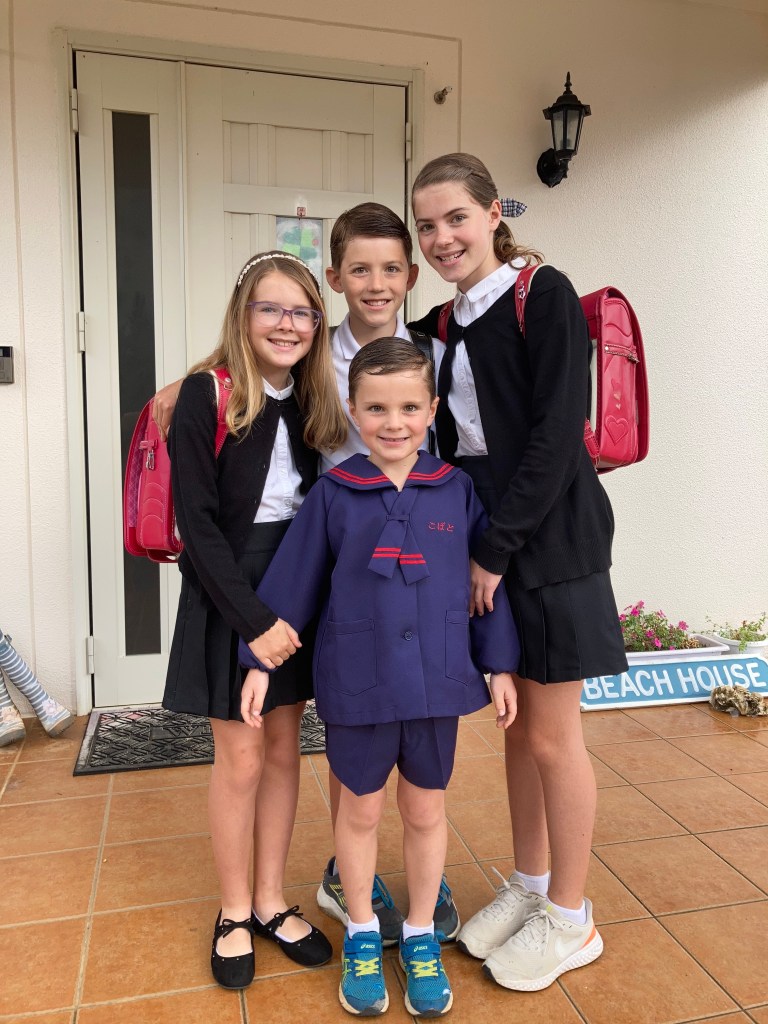
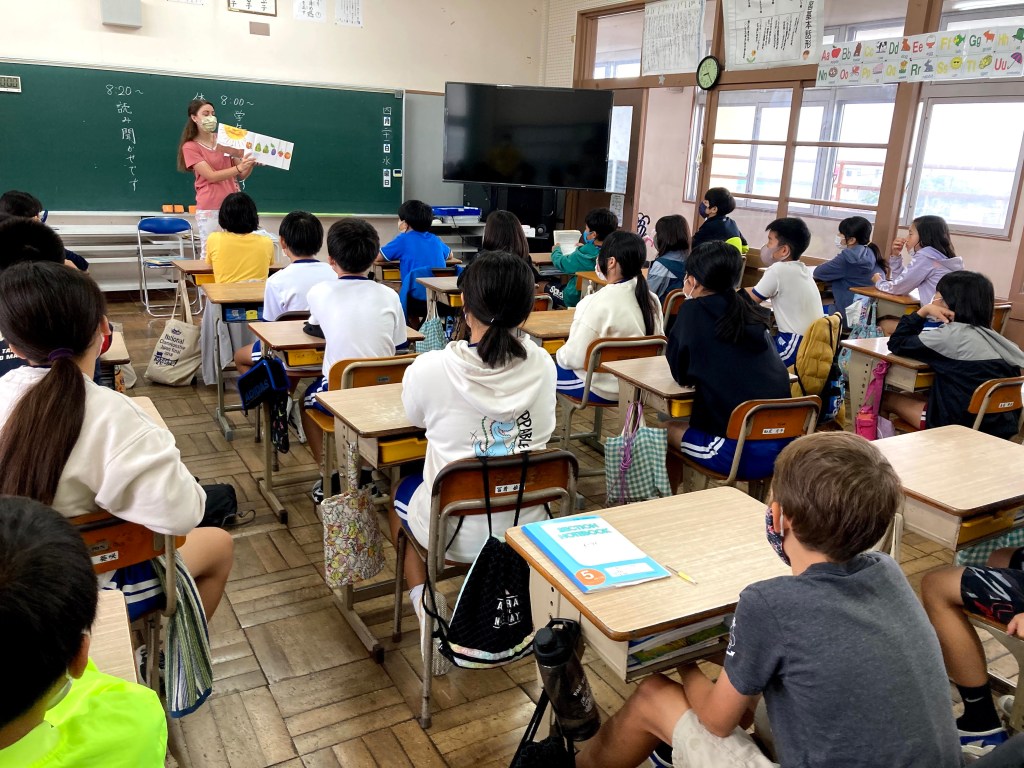
      We’ve now lived in Okinawa for over a year, and our learning continues as our kids attend public Japanese schools. A few weeks ago my 9-year-old daughter shared, “I’m so glad I go to Japanese school. Otherwise, I would never have learned tumbling on the bars! Or how to paint!”

      But artwork and gymnastics are only part of the picture. Here are eight additional lessons our family has learned from our Japanese school experience.

      Lesson #1 – Start your day OUTSIDE

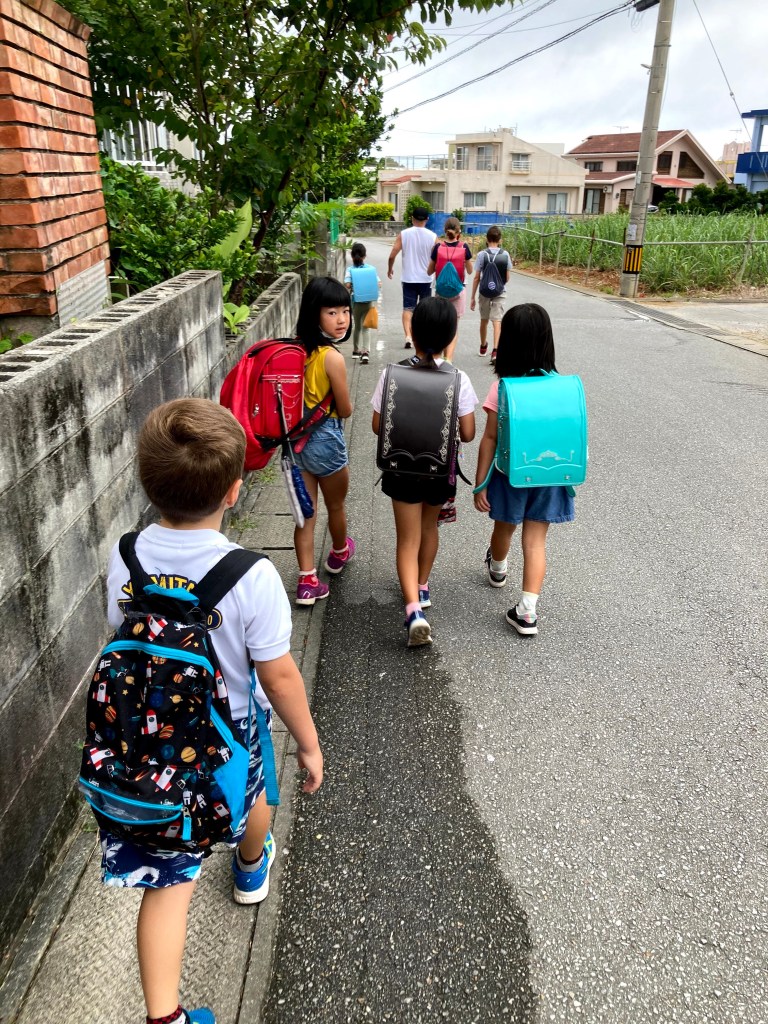
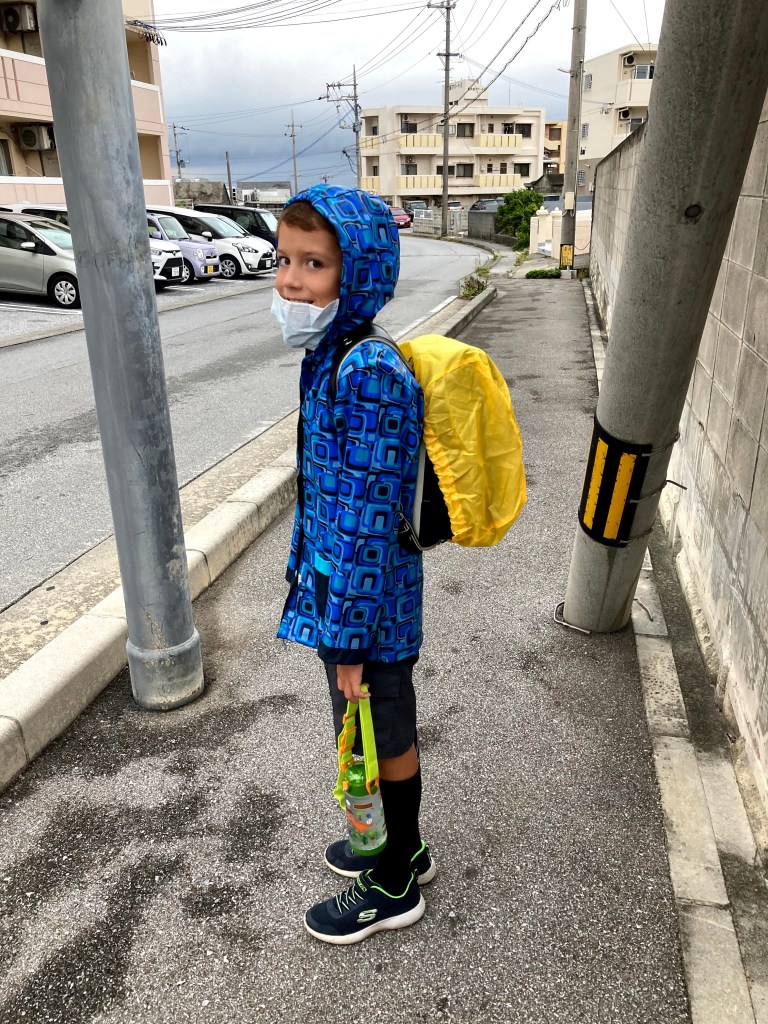
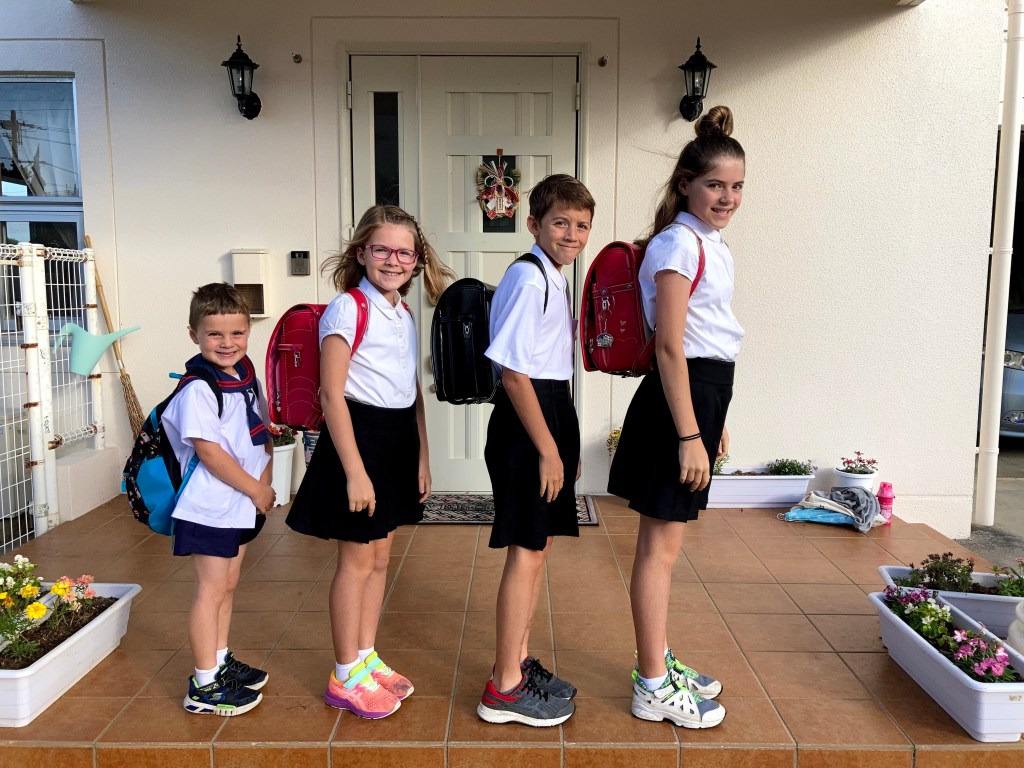
      Japanese children walk to school each morning…early! When the sun is just up over the horizon, our streets are full of cute kids laden with backpacks and trotting down the road. They get to school on their own, navigating crosswalks, busy narrow streets, and all types of weather. And, they do it without a fuss!

      Their return route is the same: over a mile of walking and weaving through fields and neighborhoods on their own, enjoying nature and fresh air.

      My own children were tentative at first about the long walk to and from school, but now it’s a regular part of their day. They set out early in rain or shine and get themselves to class. Their independence has made my life so easy! But that’s only one benefit.

      We’ve also discovered that starting the morning outside makes kids cheerful! By the time students—including my children—arrive at school, they are breathless and their cheeks are rosy. Their hearts are beating and they are prepared to sit and learn.

      The same is true on the return route. My kids come home from school with sweat beads on their foreheads, cheerful chatter on their lips, and a healthy appetite. I love it!

      Lesson #2 – Manage your own life

      There’s another benefit to starting the school day with a walk: responsibility.

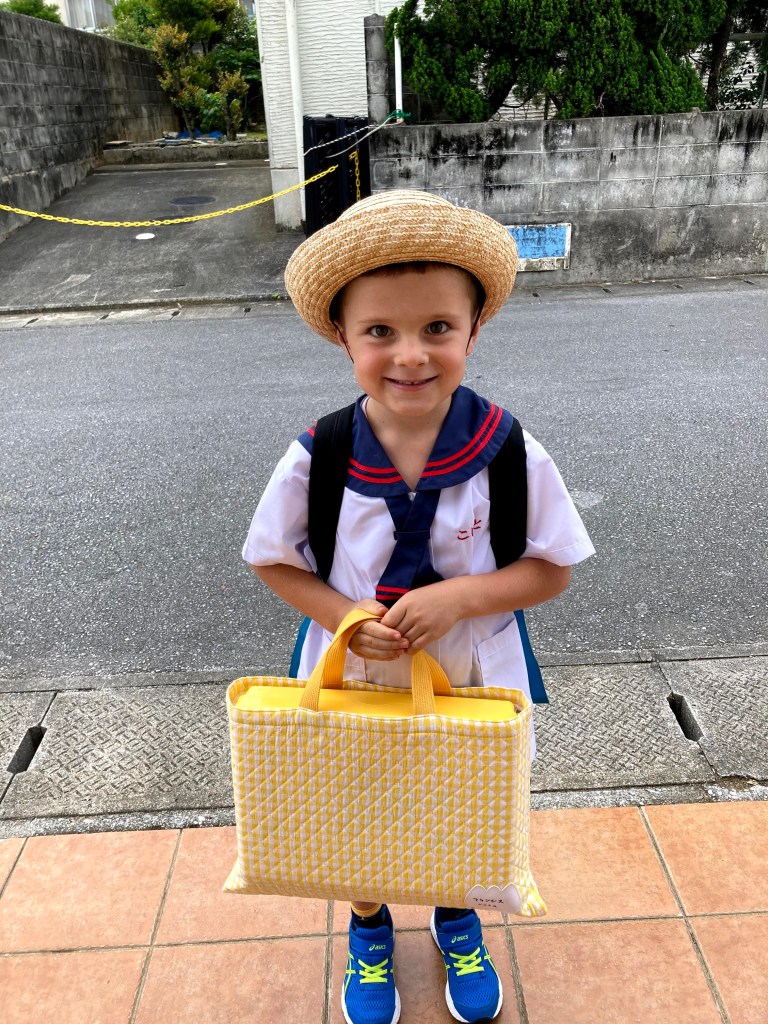
      Because Japanese children walk to school, they also manage their own school supplies, and that includes lots of items! Besides the usual pencils and notebooks; elementary students also carry jump ropes, calligraphy sets, swim caps, water bottles, sewing kits, PE clothes, musical instruments, hats, umbrellas, school shoes… The list goes on!

      Since the kids all walk, there’s little chance to go back for a forgotten book unless you can run quickly or are willing to be tardy.

      When children do forget a school item, they return home and retrieve it by themselves or survive the day without it.

      Those without PE clothes wait on the sidelines. A forgotten sewing kit means foregoing home economics class. And missing homework equals a reprimand from the teacher. These consequences are not mean, just natural outcomes.

      At first, I worried about my kids and their occasional forgotten items. But soon I came to appreciate the natural consequences. When my daughter forgot her paint set, she sat through art class watching everyone else have the fun. And the next day she triple-checked her supplies so she wouldn’t miss out again! It wasn’t my fault she was unprepared, and as a result, she didn’t whine at me or expect someone else to solve her problem. I’ve seen a conscious change in my kids’ ability to manage their own lives, and I love it!

      One morning I found a dropped school handkerchief on the side of the rode. The nearby crossing guard told me to leave it right there, as the owner would surely return eventually. In other words, the general idea is to let children make simple mistakes and be responsible themselves. What a refreshing idea!

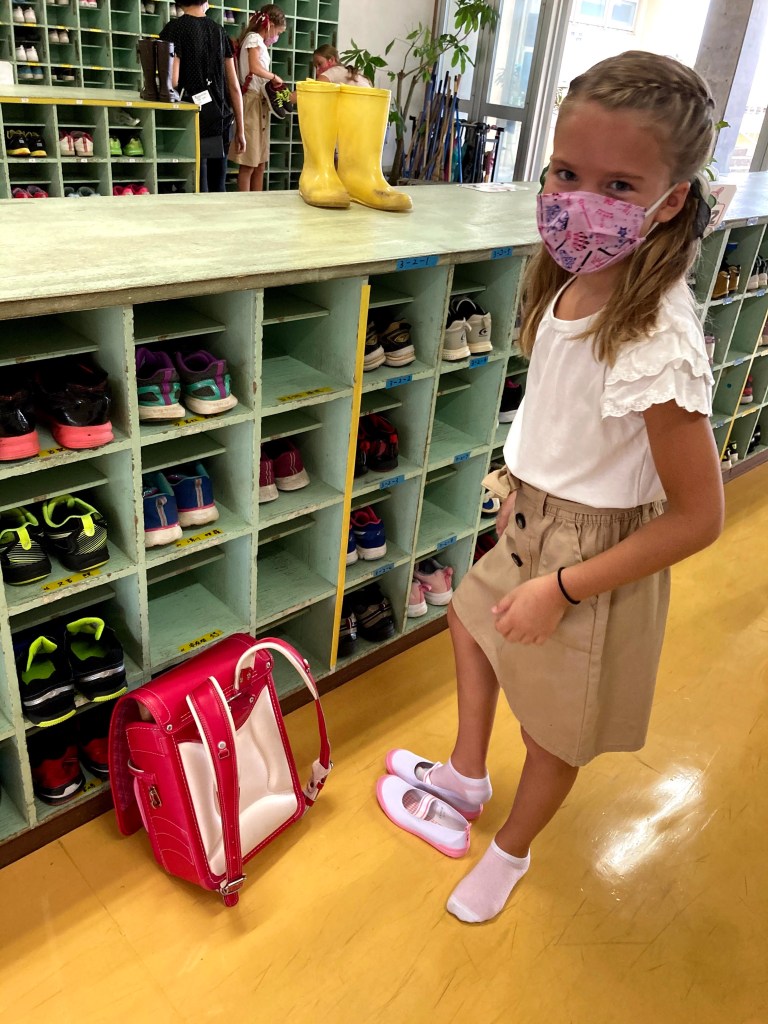
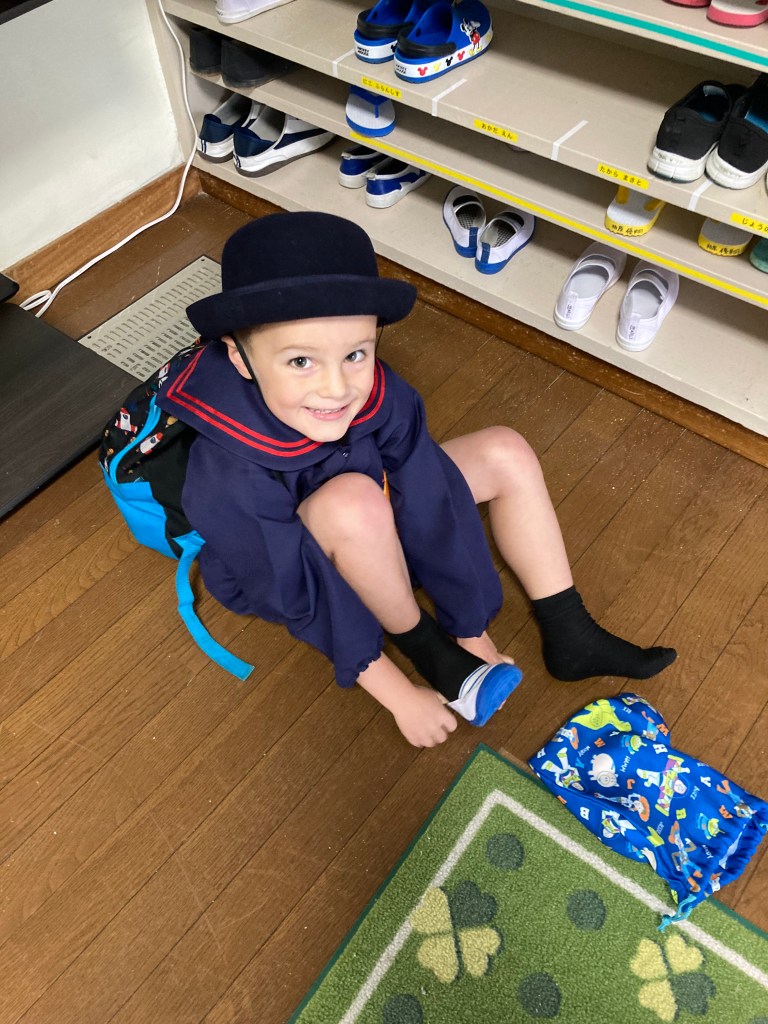
      Lesson #3 – Change your shoes

      “In America, everyone wears one pair of shoes and they walk inside and outside,” expressed my daughter one day. “That’s just so irresponsible!”

      I laughed at her comment and her new perspective on filth. But I do agree. Walking inside with outside dirt on your soles isn’t very polite. Japanese people step in and out of shoes as they come in and out of the house, in and out of the bathroom, in and out of a school or business.

      But the lesson goes deeper than mud. It’s about caring for something that’s not your own, thinking respectfully about someone else’s space, and doing your part to minimize filth.

      Moses was taught by God, “Put off thy shoes from off thy feet, for the place whereon thou standest is holy ground.” (Exodus 3:5)

      While schools, homes, and businesses may or may not be holy, the principle is sound: show respect.

      Changing shoes is a physical act with internal benefits. It invites visitors to act respectfully toward the place and people. Students revere their teachers and classrooms as places and people of learning. Wearing “school shoes” all day reminds children where they are, and helps them to remember that they are guests.

      In my opinion, homes are certainly holy, and taking a moment to “put off thy shoes” is a wonderful custom. Removing shoes is one tradition we will definitely maintain when our time in Japan ends and we return home.

      Lesson #4 – Yard work is healthy

      Wait…yard work at school? Yes. J

      Japanese school children start their day—or spend part of their school day—doing outside physical labor! They use rakes and brooms and gloves and clean the schoolyard.

      I love walking past the grounds and seeing students sweeping sidewalks, pulling weeds, raking the ball field, and watering plants. 

      Working outside is hard work, especially after a mile-long walk to school—but it’s so fulfilling. Gardening is good, so why not add it to the school curriculum? And putting students in charge of their landscape also adds to the responsibility factor.

      Watching the Japanese students do outside chores reminds me that a daily dose of yard work is a healthful choice for anyone!

      Lesson #5 – Cleaning is required

      Let’s face it: cleaning is a necessity for life! And that’s why I’m grateful and amazed that it is part of the Japanese school day. Every one of my kids—from kindergartener to 8th grader—is required to clean every single day at school. After lunch, students slide all the desks to one side of the room and sweep and mop the floor. Then they slide the desks to the other side and do the same. While some kids are mopping, others are washing windows, wiping desks, and even sweeping and mopping the hallways and stairs.

      What about the janitors? There are none. Seriously. Japanese students are the janitors at their school. Every day they learn there, and every day they clean there. In fact, special white “cleaning towels” are required school items that parents send each semester. It’s truly amazing!

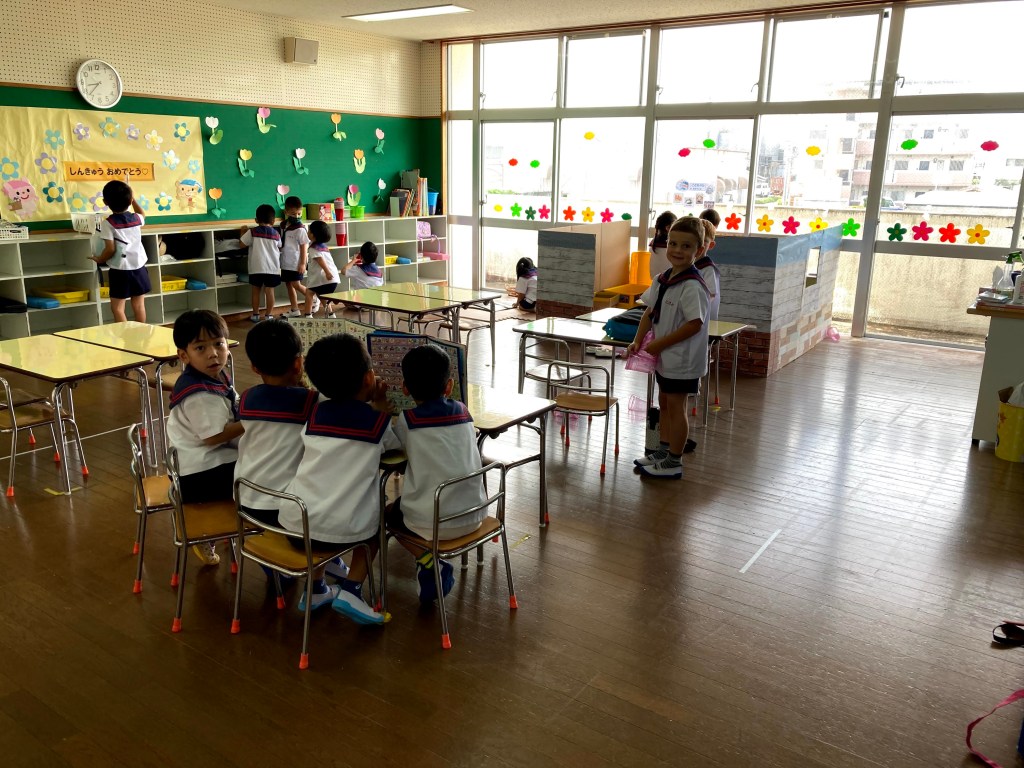
      But the best part is, cleaning time is recess! When I picked my son up early from kindergarten one day, he was upset because it was right in the middle of cleaning time! He was busy pushing his white mopping towel across the floor with his friends, and I interrupted the fun to take him home. As students clean they talk and laugh and enjoy a break from the rigors of study. Teachers stand by and direct, but kids do the labor.

      The students also learn other cleanliness skills. My kids were also formally trained in class in washing their school shoes and PE clothes…by hand. I love it!

      And the side benefits? My children are cleaner at home. Their cleaning skills have been being fine-tuned, and they understand the necessity of daily cleaning. That’s a win!

      Lesson #6 – Plan your day

      Each morning Japanese students write their school schedule in their planners. Actually, they write the schedule for the following day: Tuesday is written on Monday, Wednesday is written on Tuesday, etc.

      This written schedule includes classes like science, math, social studies, swimming, home economics, English, cooking, calligraphy, ethics, etc.  Writing ahead of time gives kids a full 24 hours notice about what items should be brought to school the following day. Plus, they can glance at today’s schedule (written yesterday) and remember what the day will hold.

      What a great tip for life!

      Can you imagine a nation of people who plan their lives 24 hours ahead? This simple habit is an advantage for all ages. And, one trait I hope my children carry with them when we leave Japan.

      Lesson #7 – Use your hands

      The Japanese school curriculum includes more than bookwork. Carving, sewing, painting and other handicrafts are also included. I’ve been amazed at some of the tools my kids are required to bring: knife carving sets, calligraphy brushes and paints, sewing kits… Teaching kids fine motor skills is important in the Japanese culture. When my children bring home artwork from their Japanese class it’s framable! It’s obvious that they have been taught precise skills, useful for the rest of their lives.

      When my 4th grader told me her teacher was asking for students to bring an “extra hand saw” to school the next day, I laughed out loud. I’m fairly certain that managing a classroom of 4th graders each carving out their own wooden decorations with pocket knives and small saws is not approved in the American school system. But I do think we’ve lost something valuable through our over-cautious legal rhetoric.

      Kids are talented enough to learn real skills at their age, and the Japanese schools build line-upon-line, grade by grade.

      This added emphasis on actual homemaking, painting, wood working, origami, and shop skills are a cultural benefit I absolutely love.

      Lesson #8 – Eat your lunch

      “My favorite food is squid,” shared my son. “What???” I choked. But he was serious! “We ate it for lunch and I really like it.”

      School lunch in Japan is cooked from scratch and served at noon. Large pots of soup, rice, and side dishes are taken to each classroom where students in turn serve bowls for each classmate. After everyone has their food, the teacher invites all to say, “Itadakemasu,” (I humbly partake) before eating.

      By noon, kids have a very healthy appetite, so they all dig right in and enjoy!

      Once in a while seconds are divvied out from the leftovers in the pot. But even better, students are required to at least try everything, and—in some classrooms—completely finish what they are served.

      I love the many lessons learned here: prepare real food, eat what you’re served, take time to give thanks, finish your meal, don’t waste food, and eat together.

      At first my kids rushed home from Japanese school “starving” for a bag of chips or a sugary granola bar. But after a few weeks their taste buds changed. Now they genuinely enjoy the healthy meals and are eating like pros: miso soup, tempura, rice, fish, potato balls, all sorts of veggies, rice, mountain roots, rice….

      “I ate all my lunch today!” my kindergartener started announcing. He not only eats lunch, but he also enjoys the afternoon snack: a piece of apple, a square of tofu, a sweet potato.

      And I’ll always treasure the day my 5th grader shared, “I ate the sweetest orange for dessert today!”

      *****************************************************

      I love the lessons our kids are learning in Japanese school: health, fitness, personal responsibility, respect, organization, cleanliness, true satisfaction, and real eating. We’ll miss these experiences when the time comes to return to the American school system. But I hope we can maintain the habits we’ve gleaned. Thanks, Japanese friends, for more life-changing lessons.

      Prayers for Japan


      First published in the Casper Journal  March 16, 2011, a week after the devastating Great East Japan Earthquake on March 11, 2011.

      I’m Japanese.  

      I know, I know. My hair is brown and my eyes are green.  And, my ancestors come from Germany and France.  Still, I consider myself Japanese.

      I lived in Japan as a college student for a year and a half, 16 years ago.  I ate their food.  I spoke their language.  I lived with Japanese natives. And, I came to love the people. 

      My heart stopped when I turned on the news Friday morning and heard about the massive earthquake and tsunami there.  

      I could picture it all:  the manicured rice fields; the ornate homes; the small cars; the organized cities.  I envisioned school children walking home from school, their crisp uniforms worn to perfection.  I pictured the mailmen on their green motorbikes, delivering mail quickly and efficiently.  I pictured the shopkeepers personally welcoming each guest into their stores; mothers, with a child on the front and the back of their bikes, pedaling the narrow streets to take a child to preschool.  And I pictured the devastation of an earthquake, and a tsunami.

      My heart broke.

      When I first received my assignment to Japan, almost 15 years ago, the land seemed foreign and strange.  Friends assured us that Japan is one of the safest countries in the world.  They were right.  During my time there, I was never afraid.  Even when I was out after dark, or sprained my ankle, or was alone on a train, I knew I was in good company.  I did experience one large earthquake, but was unharmed.  

      There is something very dignified and kind about the Japanese people.  The friends I made and the culture I learned have shaped my life since then. In fact, it was difficult to return to America after living in Japan.  When our plane landed in San Francisco, everyone around me looked big, boisterous, pushy, and a bit rude.  Americans tend to gobble their food down, instead of enjoying it bite by bite.  Americans barge into homes, muddy shoes on their feet, as if carpet will last forever.  Americans want everything big, and bigger; instead of being grateful for what we have. 

      Thankfully, some of the Japanese culture I learned now permeates my home and my family.  We leave our shoes in the “genkan” (entryway).  We often eat with chopsticks.  My children are all relatively talented at Origami.  And, we eat rice daily.  Our large rice cooker has a permanent spot on the kitchen counter.

      Once, when our favorite Botan Rice was on sale at the grocery store, I stocked up.  When I arrived at the cash register, the cashier eyed my shopping cart full of rice.  

      “Do you own a restaurant?” She asked with raised eyebrows.  

      “Oh, no,” I responded.  “I’m Japanese.”  

      “Uh,” she replied with a confused look, glancing at my eyes, my hair, and my skin.  She silently checked me through the register. I giggled inside.  

      Seven years ago, my husband and I returned to Japan to attend the International Rotary Convention.  Although it had been ten years since I had stayed there, the people were still as gracious and polite as I remembered them.  And, the food was just as delicious.  

      We took the country train back through the small towns where I had lived.  The terraced rice fields were just as green and neat as ever.  It seemed that the same old grandmas, their heads covered in scarves, were bending to plant the seedlings.  Bikes still crowded the train stations and the roads, although most people now had a cell phone to their ear. 

      We took a day and toured the Hiroshima Peace Memorial.  After several hours inside of the museum, my heart was ready to burst for the terrible tragedies caused by the atomic bomb.  As we exited the museum, a choir of school children—dressed in uniform—was singing a beautiful song on the patio.  Their voices were clear and unified.  It seemed they were singing victory; the victory of a broken people who had risen from the ashes. 

      And now, there are ashes to rise from, again. Ashes from a devastating earthquake and tsunami.

      It’s been several days since the quake.  Thankfully, I’ve made contact with friends and family members in Japan, and have found that they are safe.  There are still others that I worry about.  

      However, I have no doubt about the resilience of the Japanese people.  They came back strong after the Second World War.  They will come back again—organized, polite and grateful for what they have.  Their culture teaches them patience, hard work, and service.  It will bring them through this tragedy.  That’s the Japanese way.  A way Americans might take note of.  

      Until they recover, my prayers are with them; prayers for my beloved people of Japan.

      (When I wrote this article, ten years ago, I had no idea that I would now be living in Japan with my family.)

      Nine lessons I’ve learned from my Japanese friends

      Six months ago my husband and I moved to Okinawa, Japan with six of our children. Yes…I know. Crazy!!!

      We bid farewell to our country life in the States, flew to a small tropical island, and set up house.  We left our classic hobby farm and spacious home for a small rental house next to banana and mulberry trees; started driving on the left side of the road, and traded our snow boots for snorkels. It’s been an adventure!

      Even though I lived in Japan 25 years ago as a college student, coming back here as a busy mom has reminded me what a unique people the Japanese are. Their traditions and culture are inspiring! In fact, being here in Japan has inspired me—and my family—to re-examine several aspects of how we live.

      Yes, the language, culture, and climate are different; but the biggest change has been our altered paradigm. Instead of seeing the world through the rose-colored, affluent lens of small-town Utah, we now view life with a broader vision—complete with more empathetic hearts and a greater understanding of people in general.

      Here are nine lessons we have learned from our Japanese neighbors and friends.

      1. Eat Less

      There is a truth, universally acknowledged, that when you eat less, you feel better! Everyone knows Americans eat too much, but living in Japan has taught me how much Americans actually eat—and, I’m slightly embarrassed. We thrive on Big Macs and Biggie sizes, while most of the world survives on rice and veggies. The bottom line is we, too, could subsist (happily) on less.

      Five of my children attend local Japanese schools and eat school lunch everyday with the native students. At first, their daily bowl of rice and seaweed soup left them feeling “starved”, but after a week their bodies adjusted. Now they happily scoop up their rice with their chopsticks and slurp up their soup in the bowl. And they are content. On rare days when a piece of bread is offered, they eat it carefully and savor the sweetness. When fish or chicken is part of the meal they are grateful. And if they get a slice of orange or pear for dessert, they consider it a good day.

      No, the Japanese meals aren’t stingy, they are simply sufficient. Instead of Dino bites and mac and cheese, they offer tofu and cabbage, or fish and beans. Compared to our old school lunches, these meals actually feel real. They are not processed, but produced by local farmers and cooks.

      I am grateful for this change in our family food mindset. At home we still enjoy lasagna and Cheerios and all of the traditional comfort foods we are used to, but we now know that they are a nicety, not a necessity, a luxury not a likelihood. As Mary Poppins said, “Enough is as good as a feast.”

      Eat less, America.

      2. Clean More

      I know, I know. This sounds like an abusive rant. But the truth is, Americans often view “cleaning” as a chore for the lower class. We leave the floor mopping and toilet scrubbing to those who can’t get better jobs; and we sometimes live in grime ourselves at the excuse of being “too busy” to clean up or maintain our lives.

      Japanese people, on the other hand, consider cleanliness a skill that even the young should learn. I find this perspective refreshing. After all, isn’t cleanliness next to godliness?

      I remember when I went to pick up my kindergartener from his first day of Japanese school. There he was, dutifully washing his classroom floor with a rag. Was I appalled? No, but I was slightly shocked. Where were the janitors? The cute colored carpets? The cozy “classroom jobs” like line leader and teacher’s helper?

      Then my older kids filled me in: “Every morning when we arrive at school, and every day after lunch all of the students spend 30 minutes cleaning the school.”

      My kids explained that they wash windows, scrub floors, pull weeds, and wipe down walls. I was shocked and impressed. But what surprised me more is how much my children enjoyed it!

      “I have to get to school early today,” my daughter remarked. “It’s our class’ turn to sweep the school yard.” Sure enough, when we arrived at the school there were several kids with “stick” brooms, sweeping the dirt, pulling up weeds, picking up trash, and preparing the grounds for the morning lessons. Fun? I guess so! As I watched, the Japanese kids laughed, visited with friends, worked together and were genuinely happy.

      There are side benefits, too. One Saturday when I needed something to keep my kindergartener busy, I simply asked him to “wash the stairs.” He happily found a rag and showed me how he could get it wet and wring it out properly before mopping with it. Hooray! Happy boy, clean stairs, happy Mama.

      Which brings me to my next point…

      3. Live Simply

      Japanese school playgrounds are not fancy: a dirt field, an exercise bar or two, maybe a baseball diamond. Nothing compared to the elaborate slides and jungle gym equipment I generally see at American schools. At first—much like the cleaning—I was slightly appalled.

      “How do children have any fun on an empty field?” I wondered. But again, my kids set me straight.

      “We run around and play tag, or kick a ball, or jump rope, or dig in the dirt and look for bugs.” In other words, their creative minds still find plenty of play during recess, and they actually thrive with the challenge of living with less.

      The PE skills are impressive too. My kids have been taught and tested on cartwheels, frontwards and backwards rolls, turns and flips on an exercise bar, and high jumps over vaults. It’s really incredible.

      A few days ago my girls excitedly shared, “We just got four swings on our playground!” Four swings for several hundred kids to use each day. Kids—that I might add—who have walked a mile or two to school while carrying their supplies and wearing…a mask.

      4. Wear a mask. Asians have been doing this for years. Just do it.

      5. Don’t use your car horn. Never. Ever. Ever.

      Wait, what? Yep. Don’t ever use your car horn. I’m serious. Unless someone is dying, don’t push the button. Even if you’ve been cut off. Even if the guy in front of you stops suddenly. Even if the line of traffic slows because someone is entering or exiting. Just don’t use your horn. This is how the Japanese live, and I’m always amazed.

      When someone absent-mindedly doesn’t start moving right at a green light, the Japanese all wait patiently, “ohne” horn. When someone noses in front of them, they kindly let them merge, without honking. Can you imagine how relaxing it is to drive without road rage? If you make a mistake, that’s ok. If you mess up, no worries about feeling terrible. Just do your best and assume that everyone around you believes you are doing your best as well.

      The other day I made the mistake of glancing at my phone while waiting at a red light. When I finally looked up again, I had entirely missed the green light, and had to wait another whole cycle before I could go. And, not only did I miss the green, but all the cars behind me did, too! I was so embarrassed!

      But thankfully, the long line of cars waited patiently and silently, without laying on their horns, assuming my text must be more important than driving through the intersection. Well, my text wasn’t that important. But I did learn how courteous the Japanese people are, and I decided to be kinder myself. Remember, don’t use your horn.

      6. Take your shoes off.

      Leave the grime and dirt of the world outside. Don’t bring it into your house. It’s that easy.

      I promise, taking your shoes off will make your home cleaner and somehow, softer. Those who enter, including your children, will feel more respect for the sacred space within your walls. As the Bible teaches, “Put off thy shoes from off thy feet, for the place whereon thou standest is holy ground” (Exodus 3:5). Homes are holy. Walk softly, in clean feet.

      7. Take daily naps

      We’ve had a few painters and other maintenance workers in our yard recently. One day when I walked outside to get the mail, I was surprised to see a worker curled up comfortably on the driveway. Another was sleeping under a bush, and a third worker was prostrate on our porch, catching some shut-eye. After my initial shock, I smiled, grabbed the mail, and left them all to their few minutes of break.

      After that, I watched and discovered that everyday they took a few minutes to rest, in a prone position. How smart! Everyone needs an afternoon nap, even those of us who are not infants. Taking a brief siesta in the afternoon rejuvenates and regenerates us. It’s a piece of our American culture that we should reinsert, and would likely make each of us a little more cheerful.

      Which brings me to my next point:

      8. Be Courteous

      Japanese people are incredibly courteous and kind. Their polite, quiet mannerisms and ability to follow directions and rules make Americans look like brazen bulls. Bowing to your neighbor, always (always!) extending a greeting on the street, and willingly obeying laws and guidelines make their communities simple and safe. I am embarrassed to turn on the news and view the bashing, the riots, and the shameless disregard for authority that Americans often display. I am not referring to our right to free speech and the power that We the People are blessed to hold; I mean the lack of restraint and respect that comes from common courtesy for mankind. We can do better, America.

      default

      9. Be content

      I realize that being discontent is an American trademark. We are bred to stretch our horizons, go further, and aim for the stars. That’s the American Dream. However, while spreading our wings is commendable, there is also something beautiful about simply being content.

      I’ll say it again. “Enough is as good as a feast.” Japanese people are inspiringly content with their lives: a simple house, a car with maybe a carport, veggies and fish for a meal, some flowers on the balcony. By American standards many of them are poor, yet they are grateful and happy. As I walk the streets of our neighborhood I see small yards, simple gardens, and plain houses. Yet the children play happily with a ball or a piece of chalk, and it is enough. Their parents live in one place throughout their lives, assist the grandparents, learn a simple trade and have a good life. Perhaps there could be a happy medium between the grit-driving/always attaining lifestyle patterns of the Western world and the peaceful living of the East. Be content.

      Yes, aside from the rice, the ocean, the fish, the shoes, and the myriad of other culture differences, I’m grateful for the lessons I’ve learned from the Japanese. When we return home, I hope my kids will carry some of these patterns of living in their pockets: health, cleanliness, courtesy, contentment; and make their own lives—and our future neighborhoods—a better place to be.

      FIRST FROST

      In honor of Pregnancy Loss Awareness Month, I share my own story of grief, written in 2013. This experience is one I will never forget, a tender memory. Even though I have 10 other beautiful children, one is still gone…

      Summer is beautiful. The world is full and ripe and gorgeous. Everything blooms and grows and produces. There’s enough and to spare, until autumn. Then the first frost comes. It comes with little warning — a summer day, a warm night, a slight cloud on the horizon, and a weather forecast. If you miss the signs, you’re taken by surprise.

      “What happened to the garden?” my daughter asked one morning. We looked out through the glass patio doors. Just the day before everything had been full and green, but suddenly the beauty was gone. We ran outside to see.

      Once thriving squash plants were now lying, black, on the ground. All around us were wilted tomato plants, yellowed peppers and brittle beans.

      “Our tomatoes,” said my son, picking up a squishy mess.

      “We should have picked them all last night,” I lamented.

      “Is summer over?” asked my younger daughter.

      “Yes,” I replied. We shivered as we walked back into the house to eat our warm oatmeal.

      The chill outside wasn’t the only sudden change. Hearts can also experience frost. Our lives have generally been summer — abundant, plentiful, warm and happy. But every life has some sorrow. It usually comes suddenly. We don’t watch the forecast or want to acknowledge the cloud on the horizon. It just happens.

      Longfellow observed, “Every man has his secret sorrows which the world knows not; and often times we call a man cold when he is only sad.”

      I may have seemed cold last month, but I was only sad. Sad when the doctor said, “No heartbeat.” Sad when an ultrasound confirmed the lifeless form. Sad when I had to break the news to my husband, who was across the country on business. We cried together on the phone. Sad when I tried to pretend that everything was OK, until he came home and we told the kiddles together.

      “No baby?” Their shock was visible. “No new crib?” “No baby name?” The frost had come to our family. Overnight our dreams were wilted.

      For a few days everything hung in the air, waiting and in denial.  Our tears had been cried, and there was nothing else to tell.  It almost seemed that summer might still be around, hopeful that it wasn’t quite fall.  But it was.  

      One evening, during an evening out, I could feel it.  “It’s time,” I finally said to my husband, and we left our activities to go home.  

      On the way we passed happy people talking, hugging, unaware of the turmoil inside of us.  “Every man has his secret sorrows,” I thought again.
      Outside the sun was setting, gorgeous and brilliant.  A sign?  Even sunrises are inspiring.  Soon the world would be dark.  

      We walked carefully to the car as more oblivious people hurried past.  Everything was heavy and tense now, but we still drove slowly, peacefully, thoughtfully home.  

      Together, we walked in the front door, and in less than a minute a tiny being was there with us.  Just bigger than my thumb, and perfectly formed – ten fingers, two eyes, two eyebrows, a nose, tiny lips, tiny legs, and a hand curled up by its cheek.  We gasped and cried.  The frost had come, for real.

      When the children woke up the next morning we told them. It was autumn. Summer had really ended. They cried, too. It was a solemn day.

      That evening we gathered by the apple tree in the orchard. The branches nearly touched the ground, forming a protective shadow over the earth beneath. We held a tiny box. Together we shared and sang and wept. Even the toddlers, too little to understand, could feel the bitterness.

      How could this be? Our lives had always been summer. Always. Didn’t we have nine gorgeous children right there with us? Nine had come, all overdue — even a set of twins had arrived without a hint of trouble. They were our summer. But no matter the bounty of summer, frost brings a pang of loss.

      The little box was put in the earth, and spontaneously the children threw flowers and petals on top of it. Then we covered it with dirt, and placed a tiny, heart-shaped rock to remember. Angel baby was laid to rest.

      The days passed, and our sorrow began to heal — ever so slightly. One crisp day we went out again to the garden. There, not far from the little mound in the apple orchard, were the drooping plants and weeping tomatoes.

      However, next to them were orange pumpkins, suddenly visible now and bright in the molding blackness. Everywhere tree leaves were golden and glorious. The mums, next to the wilted daisies, were brilliant with color — yellow, purple, orange. The grapes were sweet and full, the frost bringing out their flavor, and the apples and pears were ready without a moment to spare. Everywhere the deadness was filled with new autumn vibrance — life we hadn’t noticed before.

      “Mama, look!” called my 1st grader. He was ready with his wheelbarrow and wagon to gather the fruits of fall.

      That night we ate our autumn soup, drank fresh grape juice and ate pumpkin muffins. “I like the fall,” said my son. “Summer is nice, but you don’t appreciate it until the frost comes, and makes the world a different kind of beautiful.” I smiled. Where sympathy had been before, I now had empathy — empathy for anyone who had listened for a heartbeat, or held a lifeless child, or had a box under an apple tree.

      “Every man has his secret sorrows,” and now I had mine. But just like the frost, those sorrows somehow made the world brighter. I looked at the faces of my children around the table — they were brilliant, like the mums and the grapes and the pumpkins, sweeter and dearer than before. Our frost had ultimately brought life. With a new song in my heart, I stood to serve the fresh apple pie.

      Memoires of Bettye-Down-the-Street

      IMG_2976_Original

      August 5, 2020

      My dear friend, mentor, and neighbor, Bettye Jane Hodgkins, passed away a few hours ago, at 4:30am Pacific Time, August 4th. Bettye was 99 years, 5 months and 4 days old.

      I was here in Japan when I received the news a few hours later, at 4:30am my time, August 5th. Something woke me up and I know now it was Bettye, letting me know she was on the other side, through an email sent by her dear daughter, Christine.

      When Bettye passed in America it was actually evening in Japan. There was a full moon and my husband, Mark (whom Bettye adored), suggested we go out and look at the sky from our balcony. It was cool outside, and we stood for a long time, gazing at the moon and then looking out at the ocean from our home in Okinawa. Little did we know at the time, but Bettye was slipping quietly to heaven.

      It is impossible to measure the good or influence a person can have in 99+ years of living. I only know bits and pieces of her first 78 years of life. But her final 18 years were filled with meaning for me and my family.

      Bettye had four incredible children, all whom I met. She was a devoted wife and mother. She was an artist, and always had a canvas set up in her kitchen, with paints and brush at the ready, a few finished pieces displayed on her fireplace mantel. She was also a writer, like me, which is partly why we became close friends 18 years ago.

      My husband and I moved to Las Vegas, Nevada with three young children in 2002. A day later, our 4th child was born, in our home, just four houses down from where Bettye had lived for over 60 years. Thomson Circle is a quiet place in the busy city. It’s an older neighborhood, with large mature trees and big yards full of grass—the perfect place to live with children.

      Continue reading

      Of Justice, Mercy, Equality, and Peace

      IMG_1169_OriginalOur news is full of voices demanding equality and “justice for all.” With a deep love for my country, and with empathy for those who also declare injustices, I can’t help but wonder, ‘Which of all these parties is right?’

      This morning during my personal study I came across the words of Elder James R. Rasband who spoke on the Doctrine of Christ during the April 2020 General Conference:

      “One thought has come again and again—without the Book of Mormon and its clarity about the Doctrine of Christ and His atoning sacrifice, where would I turn for peace?”

      Peace is what I long for right now. Peace from riotous voices. Peace from the demands to erase history. Peace from the clarion that we live in an oppressive nation. Peace from raging pandemics and contradicting solutions. Peace from oppressive dictators around the globe.

      And at the same time I truly desire justice for all. In this tumultuous world, can I find both?

      Justice through Christ

      Elder J. Rasband explained that we feel true peace when we fully understand that “Christ’s merciful sacrifice fulfills all the demands of justice.” In other words, believing in Christ provides the assurance that all will eventually receive justice.

      When seemingly finite efforts to ensure that “all men are created equal” fail, we can trust that justice will be served through Christ. This understanding brings peace to my soul.

      President Boyd K. Packer taught, “restoring what you cannot restore, healing the wound you cannot heal, fixing that which you broke and you cannot fix is the very purpose of the atonement of Christ” (November 1995 Ensign). Yes, true justice comes through Christ.

      But there’s more. This same Savior also provides mercy and equality. Continue reading